Sunday, June 09, 2013

Winstanley in Plainer Sight

I'm reading Christopher Hill's 1973 edition of Gerrard Winstanley's writings at the moment. It's instructive that (in the Introduction) he reads Winstanley through the lens of modern (as it was then) socialist political thought, and frames a lot of his discussion in terms of Winstanley's thinking being a precursor for the communist/socialist models of ownership/distribution.

What's particularly striking to me - reading this afresh in my post-Marxist incarnation - is how Hill has to downplay the centrality of religious thought and experience in which Winstanley was soaked/embedded in order to make his reading fit better with the tenets of secular modernity. Hill says at one point: "We must make allowances for the Biblical idiom which Winstanley shared with almost all his contemporaries, and try to penetrate through to the thought beneath." How patronising is that? As if we, with our modern political theories, can know better than the person themself what they were thinking and saying?

So interesting to re-read things with a different mindset: when I read Hill on Winstanley et al originally, I too was looking for the echoes and signs that might reinforce or 'validate' my own Marxist commitments. Now, I can read Winstanley anew, less encumbered by those particualr ideological distortions, and see his writing afresh. And he's good.

Wednesday, May 15, 2013

Showers in May

As the clouds thin and break,
Late afternoon sun picks out
White blossom beaten down to a swirl
Of confetti on the glistening tarmac.

Each puddle vibrates with tiny ripples
As flotillas of frisky flies skim
Across the water's surface.
Everything is abuzz, green and pulsing with life.

Friday, May 10, 2013

America

Thinking about America today. 

Well, about the way it portrays itself, and the way it constructs and perpetuates its self-image. (I know it's problematic to personify a nation of millions, but bear with me.)

The land of the free. The paragon of democracy, openness and possibility. 'The American Dream'. The epitome of free enterprise. The culture that Britain seems to want to emulate - so dominant are American cultural values/elements here.

A country founded on the destruction of a native population. An economy founded on slavery. A country where a civil rights movement was necessary as recently as the 1960s. A country where - it appears to the outsider - to be left wing (or, God forbid, 'socialist') is beyond the pale...where the message of freedom/plurality is dominant, but where in reality what's permissable is narrowly constrained. Iraq, Grenada, Central America in the 1980s, Vietnam.

I'm not anti-American. But I have problems with the way that the 'official narrative' of a nation is draped uneasily over the more angular and uneven skeleton of its historical reality. (See also Britain and its 'Imperial History' narrative.)

Sunday, April 28, 2013

The Shock of Nostalgia

Went on one of my familiar walks today. The last time I did this walk, maybe three weeks ago, the fields were under thick snow, the usual sheep nowhere to be seen, and the bridleway had drifts of snow blown across it where there were gaps in the hedge.

As I walked up the bridleway today I got a nagging awareness that something was different, but this awareness was just a faint suggestion at the edge of conscious thought, like that fuzzy sensation you get a little while before you know that you're going to sneeze. Sometimes something can be changed in such a big way that you don't notice it consciously, as if your brain struggles to process the magnitude of the information.

Eventually, though, I realised that the huge field normally given over to sheep-grazing had been very roughly ploughed over.


I was surprised at how shocked I was, especially by the realisation that they must have abandoned sheep-farming on this site. That saddened me: I have always enjoyed the encounters with the sheep here, especially in the dusk and in winter.

But now all the gates were open.


I guess what saddened me was the sense that this change was irrevocable; that I'd had no warning about it; and that it was a reminder about how suddenly everything can change, and all things that you take for granted as eternal turn out to be ephemeral.

There's something so brutal and transformative about this sudden, total transformation of green grass into rough earth. All that power transmitted through tractor and plough to create a new landscape.


Thursday, January 10, 2013

Three good things about today (10/01/13)


1. Hearing a beautiful Spohr clarinet concerto on Classic FM as I lay awake at a quarter to two this morning.

2. Actually waking up when my alarm went off (as opposed to sleeping through four of them...).

3. Life being a miracle. http://youtu.be/glnZpeaHfwU

Wednesday, January 09, 2013

Three good things about today


1. The late afternoon view from the third floor: a clear winter sky, colours grading down from blue zenith to warm brown horizon haze, and a gorgeous red kite cranking its crooked wings across the sky, warm-lit by the low, golden sun.

2. Nightboat to Cairo on the iPod shuffle on the way home along the foggy M40: great driving music, with your clutch foot doing the bassline and your forearms twitching to the clipped guitar upstrokes on the offbeat.

3. The mist clearing as I got back to the village, and Orion leaning over, low above the horizon, looking at least twice as big as usual.

Tuesday, January 08, 2013

Vague thoughts on a more detailed thingy

One of the books I've got on the go at the moment is "The Cloud of Unknowing", a fourteenth century treatise on contemplation as the route to the divine. One of the things that has struck me about it so far is the author's insistence that God cannot be known through the intellect or through the senses, but only through meditation, rooted in love. This almost feels like a zen-type approach, with the 'active' mind switched off so as to free yourself from the distraction of the uncontrolled torrents of conscious thought. It's only by sidling up to the transcendent God, as you mosey around in the cloud of unknowing, that you can happen upon those moments of divine clarity and insight.

Anyway, this started me thinking about music. Specifically, how we come to music when we are young, before any 'contamination' of our innocent ear has taken place - that is, before we know what individual instruments are, before we can identify each instrument's voice, and before we have any sense of genre, form, or convention.

At this stage in our development, we must be responding in the purely sensory and emotional modes: it makes us feel good or bad, depending on certain characteristics of the music: rhythm, melody, timbre, harmony and so on. But as young children we have no idea about what those things *are*, only that this thing - this noise,these voices amongst the noise - make us feel something that we like or dislike. Hence we like to repeat those experiences - so we say 'Again! Again!' once we can talk. I have a hazy sense that while this is going on we're starting to wire in connections between the auditory cortex (if there is such a thing) and the channels and circuits of pain and pleasure. Certain pathways are being reinforced within and between these parallel systems, bonding together the sensory and emotional response patterns.

Later, we start to learn technical things: what instruments are, what they're made of, and how they are played, strummed, struck or caressed. We learn that there are genres of music, stratified by age and future, and that there's stuff that it's ok to like, and there's stuff that we *shouldn't* like. Because...

And perhaps we start to specialise. And we start to listen in a different way...for the lyrical content, and the way that it carries or invokes complex clusters of political, cultural or emotional elements. Or we might start to analyse the music in terms of how it compares with other versions of the same thing, how the players emphasise this element or that,this tempo or that one, and on and on to the tiniest nuance.

And in the end we might just be listening with the intellect so intensely that we forget to hear and to feel simultaneously. I know I have felt like this sometimes in a concert hall: that I am listening to the technical execution of the piece, listening for a flaw or trying to follow an individual instrument's voice, and on such occasions I have realised that I'm hardly listening to the music at all, but rather analysing the performance.

I would like to try and get back to listening with a more innocent ear. At the end of a recent performance of the Britten War Requiem, I said to my mate, "I don't have words to describe that." And in a way I think that's how it should be.

Tuesday, December 04, 2012


The Pissed Princess in the Lepidopterium (fragment)


On winter evenings, when the dark seems to fall like a cold wave, and the stars glimmer dimly through the city’s haze, she abandons the roof terrace early and often seeks warmth and comfort in the palace’s lepidopterium. Built by her father when the steam heating system was installed, the broad, high ceilinged space is always in a state of semi-gloom, with a thick, moist atmosphere derived from the vents that connect, via copper duct pipes, to some steam-powered contraption in one of the palace’s sub-basements; somewhere down there, hundreds of feet below her, in the levels that she has never seen - nor wanted to see - there must be a final stone floor, beneath which there is nothing but rock.

Her half-empty wine bottle makes a faint ringing sound as it brushes against the stiffened fabric curtains that form the entrance to the lepidopterium as she pushes her way through, having waved away the attentions of the flunky who had stood waiting to open up the gap for her. She refers to the lepidopterium (inside her own head; she can’t ever recall saying the phrase aloud) as the ‘moth room’. Formerly the room had been brightly lit by the new electric lights, but after the palace devolved to her she had given instructions that the collection of exotic, vibrantly-coloured butterflies be removed and replaced with the biggest, darkest, prickliest moths known to the Imperial Zoological Service.

And so it was that the moth room’s shadowy spaces were thronged with heat, moisture, and the fluttering of dark wings at the periphery of vision.

She takes her usual seat, leaning over to place the bottle and the glass carefully on the stone floor before pulling the flaps of the suit of lights up over her shoulders and lap, and pushing her arms into the sleeves. She can feel the weight of the electric wires and insulation that run through the suit’s fabric, and the moisture that has cooled and condensed out of her sweat from the last session; but she doesn’t care - the slight tackiness against her skin and the imagined scent of her residual dankness is all part of the pleasure.

She pours the rest of the wine into the glass. After the flunky has taken away the empty bottle, she gestures to the attendant to turn off the room’s main lighting and to switch on the the suit of lights.

*    *    *

Friday, October 26, 2012


I Am the Interwebz

I’m currently reading Clay Shirkey’s Cognitive Surplus (which is really good, by the way), and this morning it struck me that I now think about the internet in the same way that I have been thinking about books since about 1968: that is, not at all. 

‘Not at all’, in the sense of not thinking about their physical structure; not thinking about the carrier signals/layers (paper, ink, language, the alphabet; wires, networks, data packets, electrons); and de-centring them in the mind such that only the content is of importance - all the rest is invisible.

This seems more explicable to me in terms of books, because when I was learning to read I was not old enough to be conscious of the act of learning, nor of the different conceptual frameworks were  in play: I was just doing what I was told to do - writing those letter shapes over and over - and my pre-programmed sub-conscious brain and its plastic wiring were doing all the work to make it all fit together (well done, evolution). 

With the interwebz, however, things were different: the publicly-accessible development of the hardware infrastructure and the software overlays all took place during my adult life, when I was professionally or casually involved (more or less) in activities that revolved around computing. I’m pretty sure that I used to pretty much understand how this all worked. Now I don’t really have much of a clue. 

This makes me sad. Need to find a primer.

Something Wonderful


Went to see the John Wilson Orchestra at Birmingham Symphony Hall on Saturday, on the first night of their Rodgers & Hammerstein tour. A glorious evening’s entertainment: this is music with a wry smile on its face, a cheeky glint in its eye, and an unadulterated spring in its step.  

Everything about this performance was uplifting: superb, nuanced musicianship; terrific arrangements and varieties of mood; some wonderful singing; and, at the heart of it all, the art and craft of some glorious ‘popular song’ - memorable melodies and clever, literate lyrics. I realise that there’s a lot more going on here than my objective critical outlook: a lot of these songs are bound up with my childhood memories, and associations with loved ones, but I can see past that mist of personalised romanticism clearly enough to realise that these are not (just) ‘show tunes’ - I think that this is great art.

It’s well-known that Wilson has revivified this genre through his painstaking reconstructions of the arrangements (the studio scores of which were lost), and I have seen enough of his work at the Proms to be a fan of the music and of his approach. But seeing these songs, overtures and ballet sequence music performed in a concert hall has somehow opened them up to me in a different way. For a start, seeing the interplay between singers, conductor, and orchestra from a single vantage point (rather than the multiple camera angles and cuts of TV coverage) makes you realise what a great achievement it is to be able to change pace and tone while maintaining a sense of momentum and coherence:  the music sweeps through all sorts of moods, led now by the sweet, romantic strings, now by a melancholic oboe, and now by the jazzy swing of the brass section. These different focuses are swapped back and forth among the sections of the orchestra, sometimes fading into the background as the vocal lines dominate, but always providing the solid undertow above which the main tide of the melody flows.

The singers were uniformly excellent. The soprano Annalene Beechey was new to me - she has a lovely rounded voice, sweet and rich, and her accuracy and security throughout were faultless; beautiful to listen to. I’ve seen/heard Julian Ovenden and Kim Criswell often enough on Proms broadcasts to know that they are class acts in this repertoire: Criswell always convinces as the knowing, slightly rumpled female lead, and Ovenden brings a weight and authority to the songs that can seem surprising given his slight frame. Sir Thomas Allen’s baritone is also a weighty instrument, albeit slightly quavery in the upper register in places; that said, once he got into the full flow of the songs, the dynamics of the voice seemed to change, and the climaxes of Some Enchanted Evening and Come Home were irresistible, and hugely pleasing.

Thomas Allen’s an interesting one for me: I haven’t always found him convincing in this repertoire: there’s something about the residual overtones of classical technique that get in the way of me seeing him as ‘truly inhabiting’ the song. I’m using the word ‘convincing’ a lot here - because for me this repertoire’s success rests on the authenticity of the singing and acting: the dissolution of the performer into the song and its sentiment, such that you stop seeing the performer and the song as separate entities; this is always a magical effect, and there are many barriers to its achievement. With Allen, the barriers seemed to be gradually dismantled as the momentum of the songs picked up.

Another element for me here is that the singers of each song have a line of ghosts standing behind them: all the previous performers who have inhabited the role. Some of these performances are iconic - be it from film version, classic stage run or recording - and their presence haunts the present. So for me Criswell is always channelling Ethel Merman or Judy Garland, Ovenden draws on Howard Keel and Joel McRae (in delivery if not in pitch), and Beechey on - in particular - Julie Andrews. The real trick here, it seems to me - is to make the audience conscious of these ghosts while making sure that your own performance is uppermost. When this happens, again there’s a magical effect.

I have a different kind of relationship with this music than I do with ‘art song’. The latter is ‘closed’ to me, in a way, because I have little personal, emotional connection with it: partly because I am largely ignorant of its technicalities, conventions and historical contexts; and partly because much of the meaning is obscured by foreign languages and opaque forms. Sure, there’s some of the repertoire that reaches through and touches me, but my attachment to this kind of music is mostly cerebral and admiring rather than direct and emotional. My relationship with the ‘popular song’ that the Rodgers and Hammerstein repertoire typifies is much warmer and more ‘felt’. Partly this is because I have family associations with it: it’s the kind of music that would have been on my grandparents’ and parents’ radios and record players when I was young, and the repertoire and its warm, romantic imagery and sentiment has seeped into my psyche through repeated exposures via TV showings of the films. It’s almost as if this music has been absorbed by osmosis, diffusing deep into the structures of brain and memory. 

When the enchanting melodies and smart lyrics reactivate those stores of memory and sentiment through such a skillful and charming performance as this, it’s hard not to conclude that the art of the popular song is indeed ‘something wonderful’.

Sunday, August 26, 2012


Moral Neutrality

Thinking back to my 'intense' military modelling days, I was reminded of how startled I was to find a letter in one edition of 'Military Modelling' magazine, questioning the degree to which the building of models of SS soldiers and their vehicles was morally questionable. In my innocence at that time, I had never even considered such a question.

Disappointed in not being able to find much reference to 'the ethics of military modelling' online, I googled the title of the book that the letter had referred to - 'Wenn alle Bruder Schweigen' (it has stuck in my mind for 35+ years, testament to the impression that the letter made on me.).

Dismayingly, the Amazon reviews of the book (a pictorial study of some SS elements), contain plenty of (not very coded) references: 'highly recommended, especially considering that the text does not engage in the generalized bias and character assassination so often associated with works on the SS'; 'Many SS veterans were prosecuted as criminals for their conduct in combatting guerillas who illegally disguised themselves as civilians...'; 'A must buy for anyone willing to learn how the SS developed, served and was ultimately disgraced - not by its own actions but rather by those whose agendas were (and remain) subject to political jingoism and post-war correctness.' That said...the three different reviews do all seem to have been posted by the same person.

Anyway...this has started me thinking about the 'moral neutrality' of the military modelling world: something that struck me as troubling personally after I read that letter (until that point, I had seen all the German military hardware/figures I had been building as just innocent recreations of interesting vehicles/uniforms); and something that still strikes me as a bit odd - how we can compartmentalise the political/racial/ideological elements of Nazism from the aircraft, tanks, ships and people depicted in model form.

Funny feeling. (Not very well articulated...just proto-thoughts, really.)

Sunday, August 19, 2012


Memory

Memory is the damnedest thing, when you think about it: it makes us who we are (in terms of the continuous sense of self that we reconstruct, unconsciously, every morning), and yet at the same time it is *itself* a construction - a conflation of externally-derived 'facts', stitched together by conscious and sub-conscious processes into a stable (but shifting) narrative of who we are, and who we were, and who we think we were. We bring our memories to the surface, sometimes actively, sometimes passively, and we draw upon them to bolster our sense of self, or to bolster our authority, and we largely treat them as if they are dredged up from a place where the truth holds: where facts are encoded objectively.

And so much of this activity goes on below the level of consciousness. At work the other day, I stood in the queue at the coffee 'pod' (or stall, or counter - whatever you will), and as usual my mind was racing over the immediate problems of the working day: why did that idiot do that? how am I going to be able to fit that task in alongside all the other things I have to do? why won't that new 'barista' hurry up? why am I projecting my stress and impatience onto that poor sod? how can I reconcile the reality of my business-drone existence with my self-image as a free-spirited creative socialist?

Eventually, I ordered my habitual morning latte, paid my money, and moved off around the curve of the counter front to the coffee-collection area (I am a well-trained consumer and know how to insert my corporeal being into the various production lines that I participate in). As I took my first step I bumped into the floor-standing metal frame that holds the 'queue here' sign for the coffees stall - some inconsiderate operative had sited it about eight inches away from its usual position; I must have made that ‘pay-and-then-go-to-the-collection-area’ move hundreds of times, and my brain had embedded all the elements of this activity into a routine that runs automatically, below the level of conscious thought. As I steadied the twanging metal of the sign, the woman at the collection point in front of me said 'I just did that as well'. We commiserated with each other, and I shifted the sign back to its usual position to save anyone else the embarrassment of knocking it over. 

It's a trite observation, I know, but I still think it's true that a lot of the time we are not really 'present' but are away in a seemingly separate mental world, while our bodies are negotiating the angles, planes and solid structures of the external world for us. Memory, and 'muscle memory' - the auto-generated behaviour of the motor cortex that carries us through the day: running our heart, moving our limbs, working our lungs, digesting our food, driving our cars, controlling the hundreds of actions as we write ourselves a note or tap out an email at the keyboard.

At the moment the model I have in my head about how *conscious* (purposive/directed/active) memory works is based on the idea of a labyrinth: when I follow a memory trace, it's as if I am in a dark, stone-built corridor, with a candle or lamp in my hand. I pass along through mainly familiar passageways, illuminating walls and archways that I recognise, but mostly my attention is on the thing that I’m searching for in the gloom; the stuff off to the sides is merely peripheral, and I don’t linger, or dodge off into the side-passages to see where they lead. And so it’s as if you’re always walking along pretty much the same path, over and over again, reinforcing the familiar retelling of the landmarks and increasing the likelihood that the same images and associations will be drawn forth when you set out on that path the next time.

This metaphor is itself built - in part - out of imagery from a book I first read in the 1970s - Titus Groan, the first book in the Gormenghast trilogy; there’s a section where Flay, the Earl of Gormenghast’s servant, is stalking his angular way along ‘The Stone Lanes’, a network of passageways that riddles the great castle, and which are hidden away behind the walls of the castle’s public spaces. Flay is being followed by the young Steerpike, who is lost. As he tries to keep pace with Flay, the servant’s figure is alternately silhouetted  and illuminated by the burning torches that hang in niches, creating a particular rhythm of light and darkness. 

I think this image stuck with me because I associated it with a couple of dark/light rhythms that I had previously experienced. Firstly, I had memories of being in the back of a car as it drove along a road at night. I remember lying across the seat, feeling the vibration of the road being transmitted through my cheek and the bones of my head, and noticing the way that the intensity of the orange-yellow street lamps would  wax and wane as you approached and then passed them: I tried to track the growth of the light and fix the point where the angles of the light were momentarily fixed before they flipped to the ‘diminishing intensity’ configuration, and the interior dimmed again before the car entered the next cone of light. Secondly, I had a memory of lying in bed as a child at night, with the curtains closed, and how the headlights of the cars on the main road  would create similar rhythmic patterns as the cars approached and passed the house: that same puzzle of trying to work out the pattern of angles, intensity, and the flipping point between approach and recession. I could also remember the disappointment/frustration of not being able to work it all out and visualise it all in my mind.

Now, I realise that all three of these memory components - Flay, the car interior, the bedroom - had interpenetrated each other, and modified each other, creating a cluster of associated elements that they now shared, but which had not all been present at the time when the original experiences occurred. And now, with the years of repeated recall overlaid, they are embodied in neat narratives that treat the experiences as if they were separate, distinct and objectively factual, rather than being smoothed conflations that suit the purposes of my remembering.

In contrast, *involuntary* memory seems to take you to different places, in different ways: down corridors and pathways that you had forgotten about, places where you haven’t shone the light for a long time - places that you had forgotten even existed. I am sometimes amazed by the power of this kind of sudden, unbidden memory - the way that a burst of bright light opens up a vista of colour and detail that you didn’t even know you had registered (albeit which are still subject to the ‘active reconstruction’ mechanisms that are operating in the realms of active remembrance).

Sometimes a sentence or a phrase, or a piece of music or TV footage, or a scent, will suddenly bring a flare of light into the gloom of the memory labyrinth, and a chain of associations will spring into life in colour and with texture, like Marcel’s memories of Balbec in Proust’s novel. Whereas Marcel’s initiating stimulus was a cake and cup of lime tea, mine tend - at the moment - to be image-based. 

One such trigger happened the other day, when I somehow happened across the packaging artwork for an old Airfix model kit: in this instance a Spitfire Mk. IX.


As soon as I saw this picture I was transported back to my childhood bedroom in suburban Greater London, with the contents of the model kit’s polythene bag spread out on some newspaper on the floor (I can also remember the crusty bits of the red carpet where polystyrene cement had found its way past the newspaper; and the tacky feel of the glue on your fingers; and the way that the fabric of the carpet felt when you tried to rub the glue into it/off of it so that your mum wouldn’t realise that you had made a mess…). In these memories, my friend Stephen Holmes is present: we used to buy these kits at the toyshop over the road, and then rapidly build them in parallel; I recall the Spitfire and a Hawker Typhoon in this context.

And even as I write this I can start to see how our brains are doing us a favour by not allowing us to keep remembering everything we have ever experienced: the curtains of habit are powerful and keep most of the unstoppable flow of association invisible from us for most of the time - otherwise we would be overwhelmed. At the same time, I feel a real thrill of recognition as these memories and their associations start to spill over  - the same kind of recognition and sense of validation that you feel when someone on one of those ‘I Love the 70s’ programmes reminisces about some object or cultural artefact that you were particularly enamoured of in your childhood (e.g. a Chopper bike, or an Arctic Roll, or a 7-inch single version of Chirpy Chirpy Cheep Cheep playing on a stackable record player in a sunlit summer room). 

I realise that these model-making and associated memories are deeply embedded and very important to me at some level: I spent so much time around war-related toys and models when I was a child that they have become bound up with my sense of my own history, the formation of my self, and the way that I look at the world. And they are also associated with family, with family relationships, and with particular moments and seasons of experience, all tied together and blurred together in a rich mixture of sensory memories, emotions and reconstructed narratives.

The very richness of all of these associations - buried, rediscovered, re-embellished, renewed - makes you think that you must hang on to them and value their content: as if they are imbued them with a significance and importance by the very fact of their vividness, depth and actuality. They make you who you are. Partly this is pure nostalgia and self-indulgence, but I think that without them you would be different, poorer in spirit, and diminished - even if you are only half-aware of them most of the time. The hinterland of the brain is so rich and constantly amazing.

Sunday, August 05, 2012

The Trap

It's dark. It's almost always dark. Sometimes, if you stop turning the machinery for a few moments, you might hear something different: a far-off scraping and rattling; a sound like a chain clanking. A heavy door that's dropped on its hinges, scraping across a distant floor. Stone and dust. You listen for a bit, but the sounds have stopped.

The sound of your own breathing. Sighing.

In the dark, you start turning the machinery again, finding the rhythm that suits you, so that you can do it without thinking; just making sure that that wheel keeps going round, for whatever forgotten purpose you first set it in motion.

There was a good reason, once. But you're so habituated to the action of turning the wheel that you don't think about the wider context any more. You can't even remember what the space around you looks like in the light. You pass through darkness, and into this volume of darkness. And you turn the wheel.

Sometimes you notice the sound that your feet are making on the wheel as you turn it. When that happens, you focus your attention on that sound, on its pattern and rhythm, and in focusing your attention, in bringing it into consciousness, you lose the rhythm, and your feet stutter and the wheel's motion stutters and seems to swing backwards and forwards around a central point of balance.

In the dark, you think about a time when you used to know that there were other machines beyond this machine: your own little machine in its cage, and you turning the wheel; and then a bigger cage with other machines, and other cages beyond that, all linked somehow, with the wheels turning and gears meshing, forces transferred and channelled into distant, shadowed spaces where there were clankings, scrapings, thuds and hums.

Far off, a door scrapes open. You see a faint light glimmering - a memory of the world outside, far away and far back in time.

Run.

Wednesday, May 02, 2012


Before the bombers came

What she remembers is that it was Helena’s birthday. It was Helena's birthday the day before the bombers came.

Marta had waited at the double gate of the villa’s driveway, looking out between the metal bars as she waited for the limousine that Helena’s father was sending to pick her up. She knew that mama would be standing at the big bay window on the first floor, looking down at her; so Marta was determined that she would not look back at the house – she didn’t want to do anything that would imply a thawing of the cool distance that had built up between her and mama.

She preferred that coldness and stilted politeness to the pretended friendliness and oversweet interest that mama had increasingly been showing in everything she did – she couldn’t bear it when mama came and sat close to her on the sofa, laying her hand on Marta’s arm and asking her questions, sitting so close that Marta could smell her perfumed neck and her after-dinner coffee breath. As soon as Marta heard the adults clinking their spoons as they stirred their coffee in the dining room, she started to stiffen, dreading the approaching moment when mama would come through the door into the sitting room.

And so she looked out, steadily and insolently, through the metal bars of the gate, trying not to think about mama’s annoying ways or about mama standing at the window. After a few minutes though, she started to feel uncomfortable: her party shoes were higher in the heel than she was used to wearing, and she had to keep shifting her feet on the gravel driveway to find a position where she could stand with the soles flat on the ground. Once she had noticed the unevenness and registered her own discomfort, she couldn’t think about anything else, and she was swiftly locked into an irritating cycle of shifting her posture, realising that the new position was no better, and shifting again.

To ease her annoyance she stepped off of the driveway and onto the grass. The earth was hard after the long spell of dry, early summer weather, but the lawns were well kept and the surface was smooth. Following the curve of the pale brick wall round to the right of the gates, she came to the part of the garden overlooking the bend where the road started its descent down the side of the valley. Here, the wall was shaped into deep crenulations, through which you could lean out and get a panoramic view of the valley and the distant townscape. The road canted its way down the slope of the valley wall –with a couple of switchbacks where massive outcrops of rock had frustrated the builders ambitions of a smooth path – and disappeared into the fertile greenery of the broad, flat valley floor, which was dotted with farmsteads and woods. Occasionally you might catch a glinting glimpse of a car as the sunlight caught its bodywork between the trees.

The road followed the line of the river, and the river flowed east, towards the town and, just beyond it, into the sea. Marta knew the place where the river opened out into the estuary, just north of the main walled harbour; the marshy land there was criss-crossed with dykes, and for the [Girl Guide] leaders it was a favourite destination for summer outings and picnics – not too far from the town, but with interesting flora and fauna and an isolation that created a sense of adventure.

Marta remembered the first such outing she’d been on, when she was new to the Guides and still one of the youngest and most nervous members of the [troop]. She has a vivid memory of sitting atop one of the dykes nearest the sea, the wiry grass pressing into the back of her legs. She and Helena had been watching the big cargo ships steaming towards the harbour, their stained funnels belching thick gobbets of smoke into the clear blue sky.

Wednesday, February 15, 2012

Flow State

The thing that had always bugged him about the guy was that he said ‘station wagon’ when he meant ‘pickup truck’. But because he didn’t like the guy, he held back from saying anything about it, in a way that he would never have done if he’d instead been picking up on what someone he liked had said. Funny, that - how you hold in your criticisms, because at some level you know that if you started down the road of saying something honest to this person, you might let all the other stuff spill over as well; and you can’t do that if you envisage having to work with them for the foreseeable future - makes things too uncomfortable.
But now it turns out that the guy is leaving. When the manager made the announcement, it was all he could do to stop himself from pumping his fist and saying ‘yeeeeees!’ But that’s what he’d thought. The guy is a lightweight, too full of himself and his own importance, saying what he thinks are all the right things to the managers - the buzzwords, the jargon, the management euphemisms that happen to be in fashion - but none of it rings true, none of it. ‘Station wagon’ indeed - what a twonk.
Anyway, that wasn’t what he had wanted to talk about at all…but there it was, right at the front of his mind, just waiting for the gate to click open and for gravity to do its work and let the words flow down his neck, along his arms and out to his fingers. Tap, tap, tap on the keyboard - and another unconscious burden of dislike and frustration has been consigned to paper. Well, to a digital storehouse, anyway. He’s so out of touch with neuroscience that he wouldn’t be surprised if it *was* gravity that fed the impulses from the brain and down to the fingertips. At least that kind of explanation would be comprehensible, as opposed to the fog of obfuscation that descends on him whenever he tries to think about how consciousness, imagination and creativity might actually play out in the brain-mind; and as for how these hugely complex mental activities might then be manifested through the motor cortex and into the fingers, all the time being subject to multiple feedback mechanisms (where the arms are, how hard the fingers are hitting the keys, how the eyes are tracking the keyboard and the screen, and how much sense the text is making - and whether it’s saying what ‘you’ wanted it to say.
And that’s another puzzling thing: how you might start off writing consciously about something, with a set goal and structure in mind, and yet as you progress, and maybe let your mind wander, the words seem to start taking a direction of their own, and ‘you’ start to fade in and out of the picture, as if you are only a partially active participant - the guard rather than the driver of a train, maybe? There must be a better metaphor. Anyway, the thing is, you get into a kind of ‘flow state’, where the conscious mind starts to let go of the controls, and some of the stuff that’s always going on below consciousness gets the chance to express itself - and when you get out of the way something magical can sometimes happen. 
He’s experienced that flow state thing a few times. Sometimes it would be associated with a physical activity - like cycling, or sorting things in a warehouse; with cycling, there’s a stage when you’ve been riding for a while, when you stop feeling the effort of moving your legs and lose the sense of you muscles compressing and expanding, and of the joints twisting and articulating, and all that just happens on its own, and doesn’t register - and that’s when you start to feel that exhilarating sense of freedom, of your mind operating at a different level from the body…divorced from it almost, looking down at it doing its thing while enjoying the sense of being on a different plane. Likewise, when you’ve been doing a programming or writing task, or just some repetitive copying and pasting activity that involves a number of different windows and a range of different files/multiple activities, there’s a point when your brain has absorbed all of the steps, and worked out the most effective and flowing sequence - and that’s when it lets your conscious engagement start to drift away, and does all the motor work for you; in fact, it does it *more* efficiently, because you’ve taken the constant monitoring/judging apparatus out of the way, and you’re just letting the movements flow. 
Sometimes it’s just best to get out of the way.
This echoes a thought he had in the car earlier: the thought that when he plans things too much, or tries to think them through in too much detail, or to create a ‘perfect’ structure or approach, he more often than not seizes up, or fails to complete the thing. Too much thinking creates too much fear of failure, too many barriers - he erects walls of doubt that he can’t climb over…and so the idea dies, lost in a swamp of over-preparation - soggy procrastination drowning in its own perfection.
Sometimes, you just need to get on with it. 
He sees this at work a lot, and he finds it really frustrating: how people want to think through every aspect of a question in detail, seeking security in the over-analysis of things that can never be perfected; and all the while he knows that you need to come up with the model - the vague target form - and then set off to build it, modifying both your plan and the form as you go. 
Sometimes you just have to set out, even if you don’t know the final destination, or you will never start at all.
And he thinks that this is what this is all about, this 500-words-a-day habit; a way of enabling him to access the world of the flow state by sheer mechanical repetition.
Getting out of the way.
*    *    * 

Monday, February 13, 2012

Freeform
Been doing too much *thinking* about writing and not doing enough actual writing. There have been too many unwieldy novel-related thoughts ricocheting around the inside my head and never seeing the light of day, and too many momentary images and visions that have got lost by not being articulated or fleshed out. All of which means that the words never get written.
But this thread is designed to encourage me to just sit down and put words down in a line, bypassing my internal censor (aka ‘the perfectionist procrastinator’). Taking the dictionary for a walk, in the same way that you might take a pencil line for a walk in a sketchbook - no destination, just an habitual ramble.
Begin.
500 words a day, that’s all
From a drive home…noticing the days lengthening, but with a bank of very dark cloud creating an apocalyptic evening feel…
There’s enough residual light in the late dusk to give the station wagon in front a sense of depth and solidity, which offsets the flattening effect that his own car’s headlights are having on its cab and body. As the station wagon starts to lumber up the long drag of the last hill before the town, he closes on its taillights faster than he’d intended, and has to ease off the throttle.
As his car drops back jerkily, the broad back end of the station wagon recedes, the flat glare of his headlights loses intensity, and the dusk-laden landscape and sky assume a greater degree of prominence. Although the bulk of the station wagon still dominates his field of vision - and although his focus on it is understandably enhanced by the knowledge of the effect its weight and solidity would have on his own vehicle’s crumple zones - he blank uniformity of everything else is instantly rendered with greater contrast. 
To left and right the fields are darkening under the fading light, with streaks of unmelted snow lying in parallel along the ploughing lines, and away to the west a bank of rising mist is blurring the night into the last of the afterglow. Up ahead, though, beyond the brow of the hill and its crown of trees, a big bank of deep grey-blue cloud creates a dramatic backdrop to the station wagon’s passage up the hill. It’s the kind of stormy cloud that promises lashing rain or blinding snowfall - the kind of backdrop that film directors use to create a feeling of dread and apocalyptic threat, usually with accompanying lightning flashing inside the clouds, or whorls of paler cloud creating a maelstrom of light; aliens, gods or the end of the world dwell in such skies.
The drama of such skies, and the cinematic associations they bring with them in the subconscious, make him think about how banal his life is, and how interesting it would be if, when topping the hill, the shallow basin that you look down was transfigured in some way - by light, by weather, by flood, or fire; that’s what he likes so much about mist and snow - the way that the landscape is transformed, made more interesting, re-enchanted.


* * *

Sunday, October 02, 2011


Goosebumps


Astonishing radio experience this morning, listening to Radio 3 in the car. Rob Cowan played a movement from Smetana's Ma Vlast (My Fatherland), from a recording made at a concert in Prague, a few weeks after Czechoslovakia was occupied by the Nazis in 1939.


At the end of the piece (which is based on a legend of knights emerging from a mountain to save the fatherland from peril), the applause quietens and the audience sing the Czech national anthem. Spine-tingling.


http://www.bbc.co.uk/programmes/b0159f84


Starts at 1hr 22m, ends at at 1hr 39m.

Monday, September 26, 2011

Autumnal

Autumnal
Raining acorns in the car park today: the clattering fall of them through the branches and onto the tarmac echoed between the trees.

A green woodpecker, its harsh call startling and loud in the yellow sunshine, flew up into the branches of a tree, and a red kite drifted overhead on cranked wings.

The yellowing leaves in the late morning sun.

The glare of light on an adjacent car's metal trim.

Thinking about the seasons changing, the turn of every life towards death.

Missing the dead.

Remembering watching the squirrels in the trees last week as they stripped the acorns from branch after branch, and the sound of the discarded bits hitting hard on the roofs of the parked cars below. The animals' distant unconcern for what was below. The miraculous arcs of evolution finding them here, in their companion trees; and me sitting there, with the capacity to watch, articulate what I see in language, and feel the ache of my understanding so little and making so little of my time. Thinking about the wasted hours. Vowing to myself to change.  The imperative of going back to your desk, in the heart of the building, where natural light does not fall.

Gloom.

Tuesday, August 16, 2011


Cue Harpsichord...


Plink plink plink plink plink-plink, plink plink plink-plink... "Ah, Mr Ambassador, with this fine writing you are really spoiling us!"

The second really well-written book inside six months. Remarkable.

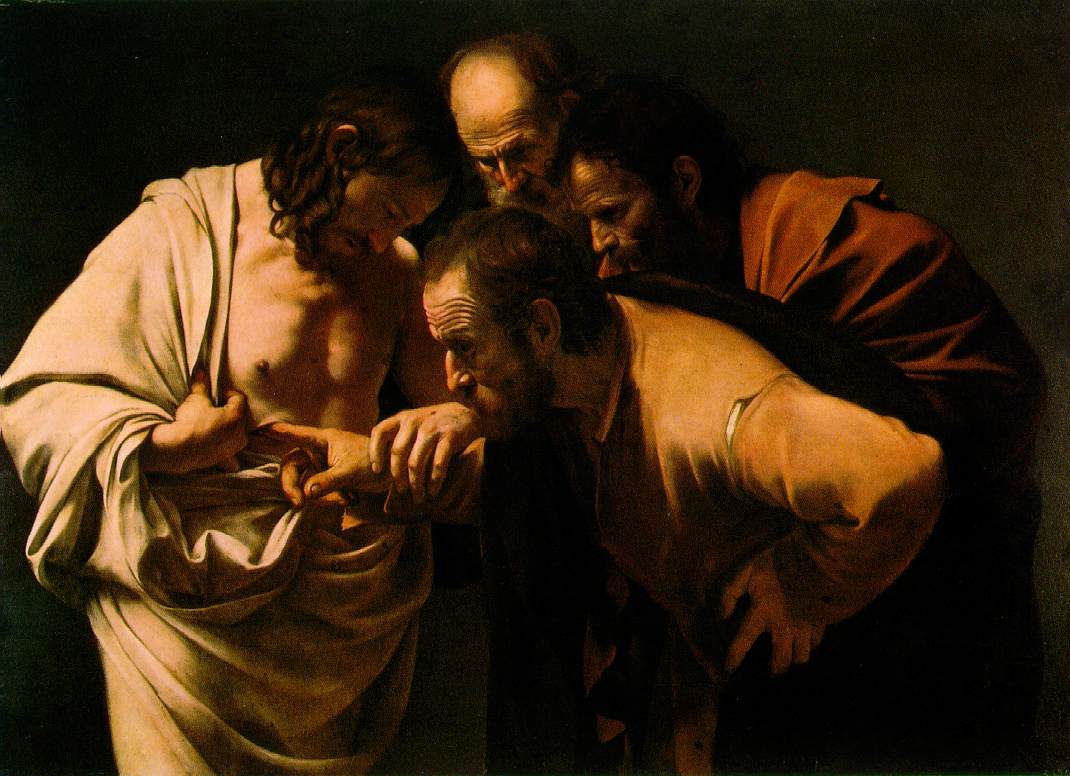
I'm currently reading Andrew Graham-Dixon's biography of Caravaggio, and am thoroughly enthused about it. It places the artist's life and work in a richly evocative social/historical context, an approach that works really well - partly because the historical learning is worn lightly, such that it never feels like an 'academic' treatment. The writing is fluent, varied and unobtrusive.

The section I read today dealt with a visitation of the plague in Milan when Caravaggio was a child - two years of death, suffering and misery: all Caravaggio's male relatives died, and the city streets were full of corpses and carts carrying the dead. You can't help but see the twisted, pained bodies of some of Caravaggio's paintings in this light...especially the sickly, greenish hues of the dead bodies therein.

Amid the plague, the city's most powerful cleric organised a series of 'spectacles of penance', one aspect of which was to set up miniature shrines throughout the city. Graham-Dixon writes beautifully about how "On a multitude of outdoor altars 'there burned a great quantity of candles and much incense'. Flame and shadow: Milan had become a city of chiaroscuro."

Caravaggio chiaroscuro

Splendid book - I recommend it.


Wednesday, August 10, 2011

Resonance

Reading a book about German intellectual history this evening, and this passage (citing Herder) resonated with me given the current febrile social climate: "To fail to make use of man's divine and noble gifts, to allow these to rust and thus to give rise to bitterness and frustration, is not only an act of treason against humanity, but also the greatest harm which a state can inflict upon itself."