Autumnal
Raining acorns in the car park today: the clattering fall of them through the branches and onto the tarmac echoed between the trees.
A green woodpecker, its harsh call startling and loud in the yellow sunshine, flew up into the branches of a tree, and a red kite drifted overhead on cranked wings.
The yellowing leaves in the late morning sun.
The glare of light on an adjacent car's metal trim.
Thinking about the seasons changing, the turn of every life towards death.
Missing the dead.
Remembering watching the squirrels in the trees last week as they stripped the acorns from branch after branch, and the sound of the discarded bits hitting hard on the roofs of the parked cars below. The animals' distant unconcern for what was below. The miraculous arcs of evolution finding them here, in their companion trees; and me sitting there, with the capacity to watch, articulate what I see in language, and feel the ache of my understanding so little and making so little of my time. Thinking about the wasted hours. Vowing to myself to change. The imperative of going back to your desk, in the heart of the building, where natural light does not fall.
Gloom.
Monday, September 26, 2011


Tuesday, August 16, 2011
Cue Harpsichord...
Plink plink plink plink plink-plink, plink plink plink-plink... "Ah, Mr Ambassador, with this fine writing you are really spoiling us!"
The second really well-written book inside six months. Remarkable.
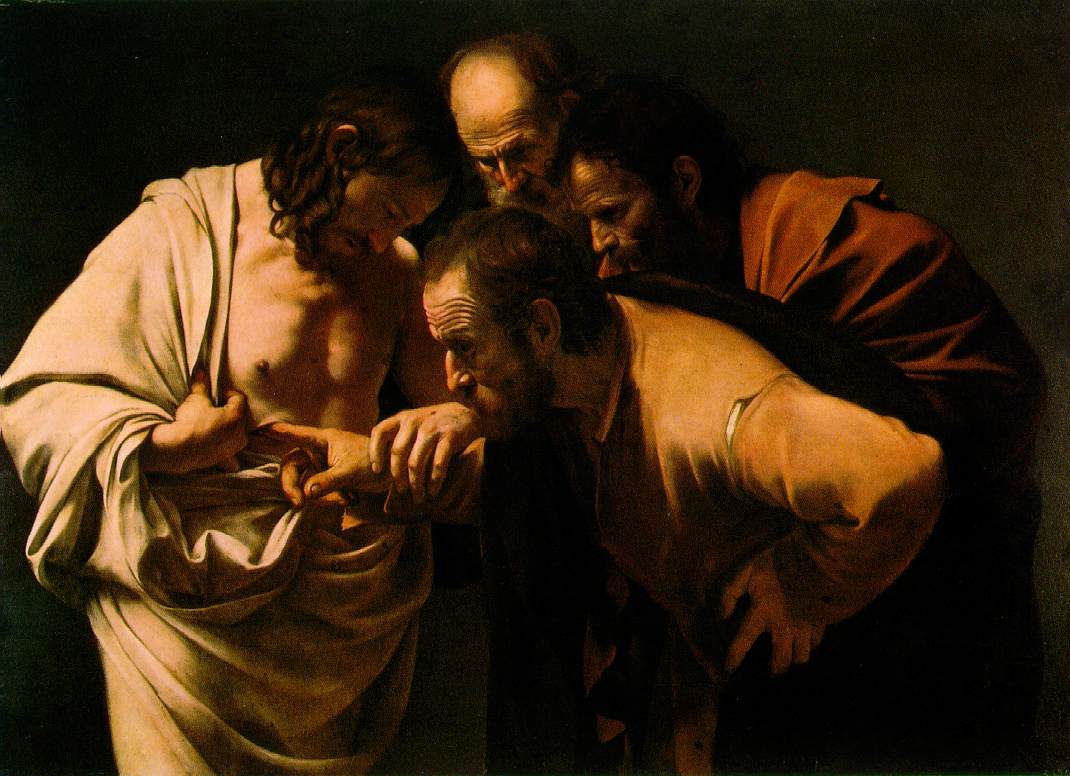
I'm currently reading Andrew Graham-Dixon's biography of Caravaggio, and am thoroughly enthused about it. It places the artist's life and work in a richly evocative social/historical context, an approach that works really well - partly because the historical learning is worn lightly, such that it never feels like an 'academic' treatment. The writing is fluent, varied and unobtrusive.
The section I read today dealt with a visitation of the plague in Milan when Caravaggio was a child - two years of death, suffering and misery: all Caravaggio's male relatives died, and the city streets were full of corpses and carts carrying the dead. You can't help but see the twisted, pained bodies of some of Caravaggio's paintings in this light...especially the sickly, greenish hues of the dead bodies therein.
Amid the plague, the city's most powerful cleric organised a series of 'spectacles of penance', one aspect of which was to set up miniature shrines throughout the city. Graham-Dixon writes beautifully about how "On a multitude of outdoor altars 'there burned a great quantity of candles and much incense'. Flame and shadow: Milan had become a city of chiaroscuro."
Caravaggio chiaroscuro
Splendid book - I recommend it.
Wednesday, August 10, 2011
Resonance
Reading a book about German intellectual history this evening, and this passage (citing Herder) resonated with me given the current febrile social climate: "To fail to make use of man's divine and noble gifts, to allow these to rust and thus to give rise to bitterness and frustration, is not only an act of treason against humanity, but also the greatest harm which a state can inflict upon itself."Tuesday, August 02, 2011
Quieting
I turned off my machine, which was playing my habitual choice of music.I turned off my preferred radio station.
I turned off the car ignition, and the air blower stopped huffing.
The leaves of the trees whispering.
The birds in the hedge-shadows calling to each other.
The low rumble of a distant airliner.
A pigeon's rhythmic cooing, dreamy and drowsy in the dappled sunlight.
In the centre of it, me, listening to my mind.
Sent from my iPhone
Sunday, July 17, 2011

Monday, May 30, 2011
Monday, May 23, 2011
Resisting Anthropomorphism, Part 735
You walk across the field. The sheep and the lambs look up, startle, skitter away from the path. Then they pause in the golden evening sunlight, feet planted in the emerald-green-after-the-rain grass.
You look at them, and they look at you. You see the cheeky-looking ones, the lively ones, the nervous ones hiding behind their mothers, and the little pale one, shivering in the breeze and looking vulnerable.
You look into their eyes and you have to remind yourself that all of this meaning is mere projection.
Sunday, May 22, 2011
Wednesday, May 11, 2011
To a Mountain in Tibet
I'm not usually one to go in for gushing reviews, but sometimes something comes along that is so good that I just can't help myself. One such artefact is Colin Thubron's To a Mountain in Tibet.
There are always good reasons to read Thubron's books: the beautifully balanced and poised prose, the colourful imagery, the historical and philosophical depth, and the insights into half-hidden cultures. As ever, this book is full of lovely writing - by turns vivid, fluent and spare, and, in this book at least, pretty austere (like much of the rocky scenery). But the spareness of the writing embodies the richest of philosophical/religious pictures, as befits a book about a journey to a mountain that is sacred to about a fifth of the planet's population, and the intricacies of Buddhist and Hindu belief unfold along the stony trackways and in the gloom of remote monasteries, where candles gutter and monks old and young struggle to find a shared language to make themselves understood amid the shadowed statues and prayer flags.
If Thubron was a craftsman, he'd be creating Faberge eggs, or delicate friezes of wooden fretwork, or Grinling Gibbons-type carvings; but the style is never just for its own sake - it's there to act as the vehicle for the story/the journey.
As well as the usual fine writing, there's an emotional edge to this journey: the recent death of Thubron's mother and, it becomes apparent, the ghost of his long-dead sister. Their stories intertwine with the narrative of the journey through Nepal and Tibet and on the approach to the holy mountain. As the journey progresses, the spiritual allusions blend with the descriptions of the scenery, and to the dozens of deities and demons that haunt the landscape for believers.
These different elements all intertwine, and you feel as if you are circling the beliefs just as the pilgrimage path circles Mount Kailas; the spiritual journey echoes the physical trek, sliding in and out of focus as you move closer towards some kind of truth. The threads are all drawn together skilfully in the concluding pages, and the climax of the journey takes place on the high slopes of the mountain, above 18,000 feet, amid tired, happy pilgrims who have completed their circuit. If you read the final section of this book and remain unmoved, you should probably make an appointment with your cardiologist and get them to check whether your heart has been removed.
Highly recommended.
Thursday, November 04, 2010
Food and Dreams
Dreamed last night that I was riding around the village on my bike, and that I stopped at a house, went in, and sat on the floor (bare boards). I was watching the family pet - a beetle - move an inverted teacup around on the floor. The beetle then transformed itself into a piece of china, then a rodent, and then a cat.
The family took all this in their stride, accepting that this was normal. I advised them that the scientific community and the military would pay millions to get hold of this creature and sequence its DNA. They remained unconvinced.
I think this dream was seeded by the 'meal' we had at the services on the A14, travelling back from May's funeral on Wednesday. Desperate for something hot to eat, we decided on something from KFC, which I believe was called a 'Boneless Box' (not very promising, I should have realised). Let's just say that the wobbly, pallid, damp bits of 'meat' shivering inside their various fatty coatings bore more than a passing resemblance to the shape-shifting, amorphous blob of matter (of indeterminate genetic origin) that I found in my dream.
Tuesday, September 28, 2010
Sidetracked
True to my resolution to get out in the open air more, this morning I wheeled my mountain bike out of the newly cleaned garage and set off, heading for the Farndon Road. It was one of those ‘in-between’ autumn mornings: sun and some white cloud, with a surprisingly strong breeze that made me glad I had layered up under my fluorescent yellow waterproof jacket; remind me to apologise to the Met. Office – it is pretty cold.
Along the Farndon Road, and up the short, sharp climb to the top of Warden Hill, then freewheel down to the Welsh Road (an old sheep-droving route to London) and across the A361 to Aston-le-Walls; stopped at the crossroads and was startled by the loud surf-noise as cars barrelled down the long, straight slope. An accident blackspot, so I’m always cautious when crossing here.
Safely back on the B-roads, I did a circuit of Aston-le-Walls and picked up the single-track road that skirts the old RAF aerodrome at Chipping Warden: there are ruined brick walls in the undergrowth and the patchy little woods that line the road, and concrete tracks and dispersal pans through the field gates. I always start to feel alert and engaged at this point on this ride, as my long-ago monomaniacal obsession with Bomber Command imaginatively transforms each weed-obscured, rusted oil drum into an object imbued with the resonances of the past.
On that little track, west of Aston-le-Walls, my imagination bifurcates, pulling in firstly these imaginative historical associations, and then secondly recalling little incidents from my own life. The site of the old airfield is now home to a number of logistics and distribution firms (at one point, cars were stored on one of the old runways), with the big old hangars still in use as warehouses, and with modern offices, Portakabins, covered smoking areas and picnic tables for the workers dotting the surrounding areas. From this site, during the second world war, flew Wellington bombers, aircrew and groundcrew passing their lives in these same surroundings.
During my college years in the mid- to late 1990s I signed on with a local temp agency and got work on this site in the long holidays: summer and Christmas, essentially, packing things in boxes, printing labels, wrapping palleted stacks of boxes in shrink wrap on a big machine: Virgin, 3COM, Guinness, mobile phone distributors. £5 an hour or so, but conducive to improved fitness in the summer – the old hangars had no air conditioning, and the sun beating down on the metal roof would create a suffocating, sweat-inducing atmosphere in the afternoons. I would usually do the 2pm-10pm shift, and cycle to and from work. A few images stick in my memory: cycling home in the cooler darkness at the end of a shift, you’d feel a burst of heat as you passed the long brick wall as you came into Aston-le-Walls, the red bricks giving off the heat that they had absorbed during the day; fields lit by the full moon, seen from the top of Warden Hill; a rabbit bumping against my pedals as it ran across the road, passing between the bike’s wheels; and a bright meteorite fizzing across the sky on the dark, dark night when the batteries ran out on my front lamp.
The track around the perimeter takes you past the warehouses, the hangars, the car parks and the security gates, then past some grazing land and allotments and into Chipping Warden village, from where you pick up the Culworth Road, which leads back to the Welsh Road. Riding along the Culworth Road, with greyer clouds blowing in overhead, I passed a little concrete track on the left that runs between two big fields. I’ve seen this track dozens of times, but never followed it before – I’ve always thought that it just ran up to some farm buildings. I did a wobbly 180 degree turn on the narrow road and went back.
The start of the track is rubbly and broken up, but further along the concrete is smoother, and patched with darker repair material. Encouragingly, there’s a ‘public footpath’ sign pointing along the track. You pass some pre-fabricated buildings that are half-hidden in the trees, and get a sense of a hand-built home, a mix of wood and brick, vegetable gardens and old machines rusting in the long grass, and then, after dismounting and lifting the bike over a stile, you come to a three-way junction: tracks to left and right, and one straight ahead. They’re all concrete still, remnants of the airfield’s remoter outposts, and there are trees growing much more thickly here, and it’s quite gloomy now under the twin canopies of cloud and leaves.
I explore the tracks in turn, on foot, and immediately start to see old brick buildings among the trees: many of the structures were built half-submerged in the earth, and have narrow, brick-lined entrance passages – probably shelters, bomb dumps and the like. Seventy years on, they have trees growing out of the thick earth and moss that has collected on their hump-like roofs. There are tall weeds everywhere, and fragments of fallen brick walls amongst the foliage. In the dim light, it’s like history fading back into the earth.

One of the roofless bigger buildings has trees growing inside it, and a still-roofed part with a thirty-foot high ceiling and runners for big sliding doors; I imagine cranes and little tractors for loading bombs/towing the bomb trollies, but now there’s just a bare concrete floor, a wheelbarrow, and a bright cast of light from the sun-side window.

Freddie and I used to play ‘war’ a lot, and we fancied ourselves as putative commandos. A few hundred yards from the end of our street, and just past the junior school that we both attended, was an area that we called ‘The Barracks’. It started just beyond the housing estate and its supporting facilities (school, a couple of shops), where the pavement stopped and gave way to rough grass, concrete tracks, low shrubs and, further in, broad concrete pans and high mounds of grass and earth, secured in brick-walled bases. This was a dream playground for us, full of broken glass, the odd rusting car, metal hatchways that opened onto drains and who-knows-what, shells of buildings, pill boxes, and the high mounds, down which we would careen on our little bikes. Many of the ruined buildings showed crude signs of recent habitation: empty bottles and cans, ashes from fires, the ever-present smell of urine and faeces, and, in one case, a perfectly deposited coil of poop that mimicked the towering structure of the Walnut Whips that we would take with us on our missions as ‘rations’. There are darker memories, too: of the time that we got into a big hut that was clearly being used by some people/organisation (there was a padlock on the door and made-up camp beds inside) and panicked when we heard voices approaching outside; of being bullied/robbed by bigger boys (which sullied and contaminated what we thought of as ‘our’ playground); and flying over the handlebars of my bike when the chain seized, and landing on my forehead, hard…I remember getting home, feeling dazed and ill, but I never told anyone what had happened. (This could explain a lot about my cognitve abilities/emotional retardation.)
This is all echoing in my mind, all afresh, as I follow the last bit of path through the woods, and on to the stile that lets out onto the pastureland. After hefting the bike over the high, rickety wood-and-wire fence, I pause for a minute to get my breath back. The pasture drops away, all rich green grass still, to the Welsh Road, on the other side of which rises Job’s Hill. I suddenly notice a couple of birds whizz by, and as I look down I see that there are swallows skimming past just above the top of the grass, a couple of dozen of them doing circuits, passing just a few feet from me. I watch them for a while, wondering what they make of the sudden fall in temperatures, and trying to picture them making the flight to their winter grounds in Africa.
The wheels of my bike leave a trail through the ankle-high grass as I push it along the footpath and down to the field gate. After crossing the road, I make the steepish climb up the western edge of Job’s Hill, staying close to the fence and dipping in and out of the sheep tracks. As I go higher, I start to feel the force of the cold wind.
At the top, I pause and look back, down past the scooped-out side of the hill, to the woods that I’ve just been walking in: they look sealed and uniform from here, the autumn foliage (just starting to yellow in places) concealing all of the buildings and the decay. Further off, I can see the hangars and ancillary buildings of the logistics centre, as well as the line of poplar trees that were planted along the axis of one of the old runways.

Walking to join the bridleway that skirts the edge of the next field, I look at a tree in the hedge: a bit of blue nylon rope has been tied around it at some stage, and the tree has expanded to fill the rope loop to bursting – the bark is starting to bulge out beyond the nylon.
Rain is starting to fall as I ride along the tarmac track that leads past a couple of cottages to the Farndon Road, but I stop to take some pictures of a big bird that’s hovering above the roadside verge. At first, the bird puzzles me: it’s hovering like a kestrel, but it’s too big to be that, and its wingbeats have the wrong rhythm. It moves closer to me, and eventually I realize that it’s a buzzard. (I’ve never seen one hover like this.)

The rain is falling more steadily as I reach the last mile of my ride. The drops are sharp and cold on my face, and the rainfall is making a silvery curtain that mists the trees at the top of Eydon Hill. Suddenly cold, I find myself thinking about how nice it would be to have a cup of chocolate and some buttered toast when I get home. And then my mind wanders on to memories of rain-greyed Sunday afternoons in childhood, fading into dark nights full of dread of the inevitability of school on Monday morning.
It’s good to take a neglected path and find new things (as well as reminding yourself about things that you’d forgotten). I might try and get sidetracked again soon.
Monday, July 26, 2010
Eulogy for my stepdad
(from his funeral last week)
I consider myself very lucky to have known Glyn, and privileged to have such a kind man as a step-father.
I don’t think that Glyn would have thought of himself as an heroic man, but he did something pretty brave in his mid-50s – he married my mum. Not that that was brave in itself (she’s lovely, of course), but she came attached to three sons and a very boisterous dog.
It can’t have been easy to adopt a pre-packaged family unit after decades of bachelordom, but he did it with aplomb.
I remember when mum first said that she was going out for the evening with ‘a man called Glyn’. I pictured a big, burly prop-forward kind of fella, with cauliflower ears and a low IQ. Instead, I met a polite, gentle man who liked classical music (especially light opera and Beethoven), and whom I instantly wanted to impress (no teenaged rebel, me…).
Of course, Glyn’s quiet façade soon began to slip, and his true nature showed through, in the form of a river of talk, endless stories and a great big laugh – like a Welsh Syd James on steroids – He yah yah yaaah!
He also revealed his loving and protective nature, looking out for mum amid teenaged tantrums and selfishness, rarely raising his voice or losing his temper (despite heavy provocation from the younger generation…).
For us boys, and for mum, he provided great solidity, security, warmth and comfort: priceless for our family after a period of upset and instability.
In later years, after his retirement, I got to know Glyn better, especially when I was at colleges and had long vacations. We went for lots of walks together, often involving canal tow paths and invariably ending up at a pub, and we would enjoy the countryside and the wildlife together, and get mellow over a pint.
The things that I’ll remember most about Glyn are his kindness, friendliness and generosity, which he showed to everyone he dealt with, every day, every time. I think this capacity for kindness and goodness characterise his essential nature.
He showed me that the value of a life can be measured in the small things that you do every day: in the way that you treat people, in the mark that you make on others, in the security and peace and atmosphere of warmth that you create for them.
If I can live a life as kind and as affection-evoking as Glyn’s, I will be happy. He was a fine role model.
Safe journey, old boy!
Tuesday, April 27, 2010
A 361, Early Morning
Above the hedge, where the road bends ahead, I can see a little bit of steam catching the light from the just-risen sun. When I get there, there are some cows browsing the grass and hedge, brown and white shoulders and heads all lit up in the bright light. As I pass, I can see the sunlight glinting in the big, glossy eye of the nearest cow, which is lifting its nose up. That eye must be taking in my speeding car, the hedge opposite, the weird ribbons of mist above the line of the stream through the meadows, and the slight rise in the land; and, above that, the crystal light of the low sun. That animal is staring at all of life, and its own clear, imminent death in the service of human needs. (Like all of us...)
Sunday, April 25, 2010
Quote
A resonant passage from a review of books on the financial crisis in this week's TLS (23 April, p.8):
' "More than any other individual...[Greenspan] was responsible for letting the hogs run wild. [...] It was a form of crony capitalism...The gains of financial innovation and speculation are privatised, with the bulk of them going to a small group of wealthy people who sit at the apex of the system." Their wealth has created the framework for a dysfunctional society in which bankers living on multi-million pound bonuses presume to tell governments that the solution to the problems they have created is to take the axe to public spending, starting with welfare benefits and the NHS.'
Saturday, April 17, 2010
My own private spring-watch
Stopped for a while during today's invigorating, sunlit bike-ride to watch some birds above a bare field under a cloudless sky. There was just one at first, a lapwing, with that distinctive squarish wing shape, the black and white underwing catching the sunlight with each up-flap. Then another one appeared, and the first one started doing an amazing display flight: steep, bent-winged dives, pulling up just before he hit the ground, skimming across the field inches above the bare earth, then climbing again to do a leisurely circuit before he repeated the dive-bombing manoeuvre. And all the time, he's emitting the weirdest sounds: little electronic-sounding tweets and whoops, almost R2-D2esque, or like the noises that come out of a badly-tuned shortwave radio.
A nature first for me.
How lovely to have a bit of the world re-enchanted right in front of your eyes.
Tuesday, April 13, 2010
Editors: You Count!
From a review in this week's TLS:
"All writers make mistakes, and someone could find plenty of them in any unedited manuscript of mine. But we count on publishers to provide an essential safety net in the form of good copyediting and proofreading. Here, Oxford University Press has let its author down, to a degree I have never seen in a published book. Whatever the cause, it is an insult to readers and writers alike when a piece of work edited with such negligence is put out by a press renowned for publishing some of the most distinguished books in our language."
Sunday, April 04, 2010
The Power of Music Redux
Listening to Ligeti's Requiem for Soprano, mezzo-soprano, mixed chorus and orchestra recently, I was struck by the way that this music can unsettle me, physically, and - in the right circumstances - even evoke feelings of fear and paranoia. This is rare: I'm struggling to think of other pieces of music that I listen to regularly that can elicit similar feelings. In particular, it's the Kyrie that achieves this effect, for a number of reasons (beyond the sheer other-worldliness and strangeness of the music).
Firstly, there's the association with 2001: A Space Odyssey. When I first heard this music, in the context of the film (this was at the cinema, shortly after release, so I'm thinking 1969, probably), I would have had no conception of how music worked (let alone complex modern music like this) - i.e. what the instruments were, how the different parts and sounds were created and interacted, what the music was 'doing'. At that time, I would have just heard a kind of sonic landscape, a swirl of mood and impression, a mental space where some effects were created through sound, largely unmediated through any thought process, conscious interpretative act or embedding in any informed musical/cultural background: I was seven.
And, of course, my experience of the music would have been intimately coloured by the cinematic context in which it was being played: for starters, there was the (to my eyes) visual feast of 2001 itself - black, black space, a few stars showing faintly; the cool greys and whites of the space vehicles, and the clinical, glossy whiteness of the interiors; the ultra-modern computer technology and light displays; the eerier elements of the pre-human segment. Added to this would have been the relative novelty of being in the cinema, and seeing this kind of film (science fiction) on a big screen for the first time. I would have seen Chitty Chitty Bang Bang at the cinema before this, I think, but 2001 would have been a different kind of sensation: it would have felt, I think, as if I was looking at something more adult, more secret, more strange. If my memories of this are true, I recall seeing at one of the Ealing (West London) cinemas, and I remember the vast blackness of the screen in the darkened cinema, and the bluish-white glow of the earth and the moon (hazy auras and ethereal feel) on the screen, and the dust motes floating in the light from the projector. (This is retrospective in part, amplified, suspect.) I seem to remember my mum and my brother being there, seated to my right, and I seem to have a memory of looking along the row of seating and seeing all of the watchers' faces bathed in that blue-white light, and I have a sense of now of my young self wondering if those people were feeling the same awe in the face of this beauty as I was.
I'm not sure precisely where the Requiem was used in the film, but my recollection is that it's either in the Dawn of Man sequence (at the end of that sequence, when the apes are all going - er - apeshit around the monolith) and/or when the astronauts are walking around the Tycho monolith on the moon.
The essence of the music for most of my life has been the split effect of the choir and the solo voices: the sense of a disturbed, gibbering dialogue that's taking place somewhere strange and alien: somewhere out of normal place and time, somewhere that's different from the familiar world of everyday perception and thought and sound and experience that we usually live in. This sense of the music has been pretty much wordless in my mind: felt and seen rather than articulated or understood consciously - a sense of the strange, the ethereal, the sublime and - perhaps - the spiritual suffused with an otherness, a barely understood beauty.
Last year, another layer of meaning was laid down over this established mental landscape; this new layer was partly a function of place, time and imagery, and partly the result of my burgeoning sense of mortality and - er - existential darkness. The place was a rented holiday cottage in Trallwm, in deepest mid-Wales, and the time was late on a dark September night, as I lay in bed listening to the Ligeti piece on my iPod. I was under the bedclothes, looking up through the uncurtained skylight at the night sky, which was deep blue-black (no street lights here) and generously sprinkled with so many stars that the usual familiar constellations were difficult to pick out. I knew that the sky would be rimmed by the deeper darkness of the forest trees, and that the moon would rise later, illuminating the wisps of cloud moving across the slower-moving face of the starscape.
And, looking up at this visible patch of the universe through the skylight, I was suddenly aware of the terror and hatred in the voices on the Kyrie: there's nothing 'merciful' here, it suddenly seemed to me - rather, the music and the tone and drive of the voices makes me think of fear, chattering teeth, ashes, bodily terror, bitterness and accusation. It's as if all the singers are lost souls, or ghouls and demons, flanking the edge of a great dark pit into which the lonely, terrified, tortured souls of the dead are cascading in a pitiless stream. The voices offer no comfort, only mockery; no kindness, only vituperation, sarcasm and vindictiveness. They are telling the fallen souls that there is no solace, no redemption and no happiness in the afterlife: only this death, this terror, this meaningless gibbering, wailing and gnashing of teeth. All is lost: abandon hope all ye who enter here.
That's what this music means to me now - an abyssal emptiness, overlaid with the short and tenuous cable of an individual life. And, on the sidelines, a chorus of mockers who undermine any meaning or purpose.
Power of Music
Just heard a remarkable piece by Poulenc for the first time. It's from the end of his The Dialogues of the Carmelites opera, and is based on the execution of Carmelite nuns during the French Revolution. The all-female chorus gradually diminishes in intensity and number as, one by one, the nuns are led to the guillotine, while the remainder sing a beautiful Salve Regina. The singing is punctuated by the chilling schslisst of the falling blade, until the singing stops. Very affecting.
Sunday, March 21, 2010
Spring Song in B flat
Bike, B-roads, bright and breezy. Two butterflies. Big endorphin surge. Bootiful.
But.
A brace of dead pheasants, bright blood and paler entrails on the bitumen, and a gas-bloated badger decomposing by a field gate: sodden and battered by yesterday's rain, canines exposed in a final, fixed snarl.
Another day between here and gone.
Thursday, February 11, 2010
Winter Nature Notes
Beautiful winter late afternoon: clear blue sky, the sun going down in flames beyond the steam billows of Didcot power station, and some streaky grey-purple clouds in the east. Windscreen flecks of motorway salt refract the last sunlight, all scratchy on the eye.
By the time I get to Junction 9, the northern sky is a perfect winter gradation: down from pale blue, to aquamarine, through orange and yellow, to that hazy, rusty winter brown near the horizon. A silhouette light plane drifts across the sky, and two parachutists circle down into the dusk.
Subscribe to:
Posts (Atom)