Sunday, August 26, 2012


Moral Neutrality

Thinking back to my 'intense' military modelling days, I was reminded of how startled I was to find a letter in one edition of 'Military Modelling' magazine, questioning the degree to which the building of models of SS soldiers and their vehicles was morally questionable. In my innocence at that time, I had never even considered such a question.

Disappointed in not being able to find much reference to 'the ethics of military modelling' online, I googled the title of the book that the letter had referred to - 'Wenn alle Bruder Schweigen' (it has stuck in my mind for 35+ years, testament to the impression that the letter made on me.).

Dismayingly, the Amazon reviews of the book (a pictorial study of some SS elements), contain plenty of (not very coded) references: 'highly recommended, especially considering that the text does not engage in the generalized bias and character assassination so often associated with works on the SS'; 'Many SS veterans were prosecuted as criminals for their conduct in combatting guerillas who illegally disguised themselves as civilians...'; 'A must buy for anyone willing to learn how the SS developed, served and was ultimately disgraced - not by its own actions but rather by those whose agendas were (and remain) subject to political jingoism and post-war correctness.' That said...the three different reviews do all seem to have been posted by the same person.

Anyway...this has started me thinking about the 'moral neutrality' of the military modelling world: something that struck me as troubling personally after I read that letter (until that point, I had seen all the German military hardware/figures I had been building as just innocent recreations of interesting vehicles/uniforms); and something that still strikes me as a bit odd - how we can compartmentalise the political/racial/ideological elements of Nazism from the aircraft, tanks, ships and people depicted in model form.

Funny feeling. (Not very well articulated...just proto-thoughts, really.)

Sunday, August 19, 2012


Memory

Memory is the damnedest thing, when you think about it: it makes us who we are (in terms of the continuous sense of self that we reconstruct, unconsciously, every morning), and yet at the same time it is *itself* a construction - a conflation of externally-derived 'facts', stitched together by conscious and sub-conscious processes into a stable (but shifting) narrative of who we are, and who we were, and who we think we were. We bring our memories to the surface, sometimes actively, sometimes passively, and we draw upon them to bolster our sense of self, or to bolster our authority, and we largely treat them as if they are dredged up from a place where the truth holds: where facts are encoded objectively.

And so much of this activity goes on below the level of consciousness. At work the other day, I stood in the queue at the coffee 'pod' (or stall, or counter - whatever you will), and as usual my mind was racing over the immediate problems of the working day: why did that idiot do that? how am I going to be able to fit that task in alongside all the other things I have to do? why won't that new 'barista' hurry up? why am I projecting my stress and impatience onto that poor sod? how can I reconcile the reality of my business-drone existence with my self-image as a free-spirited creative socialist?

Eventually, I ordered my habitual morning latte, paid my money, and moved off around the curve of the counter front to the coffee-collection area (I am a well-trained consumer and know how to insert my corporeal being into the various production lines that I participate in). As I took my first step I bumped into the floor-standing metal frame that holds the 'queue here' sign for the coffees stall - some inconsiderate operative had sited it about eight inches away from its usual position; I must have made that ‘pay-and-then-go-to-the-collection-area’ move hundreds of times, and my brain had embedded all the elements of this activity into a routine that runs automatically, below the level of conscious thought. As I steadied the twanging metal of the sign, the woman at the collection point in front of me said 'I just did that as well'. We commiserated with each other, and I shifted the sign back to its usual position to save anyone else the embarrassment of knocking it over. 

It's a trite observation, I know, but I still think it's true that a lot of the time we are not really 'present' but are away in a seemingly separate mental world, while our bodies are negotiating the angles, planes and solid structures of the external world for us. Memory, and 'muscle memory' - the auto-generated behaviour of the motor cortex that carries us through the day: running our heart, moving our limbs, working our lungs, digesting our food, driving our cars, controlling the hundreds of actions as we write ourselves a note or tap out an email at the keyboard.

At the moment the model I have in my head about how *conscious* (purposive/directed/active) memory works is based on the idea of a labyrinth: when I follow a memory trace, it's as if I am in a dark, stone-built corridor, with a candle or lamp in my hand. I pass along through mainly familiar passageways, illuminating walls and archways that I recognise, but mostly my attention is on the thing that I’m searching for in the gloom; the stuff off to the sides is merely peripheral, and I don’t linger, or dodge off into the side-passages to see where they lead. And so it’s as if you’re always walking along pretty much the same path, over and over again, reinforcing the familiar retelling of the landmarks and increasing the likelihood that the same images and associations will be drawn forth when you set out on that path the next time.

This metaphor is itself built - in part - out of imagery from a book I first read in the 1970s - Titus Groan, the first book in the Gormenghast trilogy; there’s a section where Flay, the Earl of Gormenghast’s servant, is stalking his angular way along ‘The Stone Lanes’, a network of passageways that riddles the great castle, and which are hidden away behind the walls of the castle’s public spaces. Flay is being followed by the young Steerpike, who is lost. As he tries to keep pace with Flay, the servant’s figure is alternately silhouetted  and illuminated by the burning torches that hang in niches, creating a particular rhythm of light and darkness. 

I think this image stuck with me because I associated it with a couple of dark/light rhythms that I had previously experienced. Firstly, I had memories of being in the back of a car as it drove along a road at night. I remember lying across the seat, feeling the vibration of the road being transmitted through my cheek and the bones of my head, and noticing the way that the intensity of the orange-yellow street lamps would  wax and wane as you approached and then passed them: I tried to track the growth of the light and fix the point where the angles of the light were momentarily fixed before they flipped to the ‘diminishing intensity’ configuration, and the interior dimmed again before the car entered the next cone of light. Secondly, I had a memory of lying in bed as a child at night, with the curtains closed, and how the headlights of the cars on the main road  would create similar rhythmic patterns as the cars approached and passed the house: that same puzzle of trying to work out the pattern of angles, intensity, and the flipping point between approach and recession. I could also remember the disappointment/frustration of not being able to work it all out and visualise it all in my mind.

Now, I realise that all three of these memory components - Flay, the car interior, the bedroom - had interpenetrated each other, and modified each other, creating a cluster of associated elements that they now shared, but which had not all been present at the time when the original experiences occurred. And now, with the years of repeated recall overlaid, they are embodied in neat narratives that treat the experiences as if they were separate, distinct and objectively factual, rather than being smoothed conflations that suit the purposes of my remembering.

In contrast, *involuntary* memory seems to take you to different places, in different ways: down corridors and pathways that you had forgotten about, places where you haven’t shone the light for a long time - places that you had forgotten even existed. I am sometimes amazed by the power of this kind of sudden, unbidden memory - the way that a burst of bright light opens up a vista of colour and detail that you didn’t even know you had registered (albeit which are still subject to the ‘active reconstruction’ mechanisms that are operating in the realms of active remembrance).

Sometimes a sentence or a phrase, or a piece of music or TV footage, or a scent, will suddenly bring a flare of light into the gloom of the memory labyrinth, and a chain of associations will spring into life in colour and with texture, like Marcel’s memories of Balbec in Proust’s novel. Whereas Marcel’s initiating stimulus was a cake and cup of lime tea, mine tend - at the moment - to be image-based. 

One such trigger happened the other day, when I somehow happened across the packaging artwork for an old Airfix model kit: in this instance a Spitfire Mk. IX.


As soon as I saw this picture I was transported back to my childhood bedroom in suburban Greater London, with the contents of the model kit’s polythene bag spread out on some newspaper on the floor (I can also remember the crusty bits of the red carpet where polystyrene cement had found its way past the newspaper; and the tacky feel of the glue on your fingers; and the way that the fabric of the carpet felt when you tried to rub the glue into it/off of it so that your mum wouldn’t realise that you had made a mess…). In these memories, my friend Stephen Holmes is present: we used to buy these kits at the toyshop over the road, and then rapidly build them in parallel; I recall the Spitfire and a Hawker Typhoon in this context.

And even as I write this I can start to see how our brains are doing us a favour by not allowing us to keep remembering everything we have ever experienced: the curtains of habit are powerful and keep most of the unstoppable flow of association invisible from us for most of the time - otherwise we would be overwhelmed. At the same time, I feel a real thrill of recognition as these memories and their associations start to spill over  - the same kind of recognition and sense of validation that you feel when someone on one of those ‘I Love the 70s’ programmes reminisces about some object or cultural artefact that you were particularly enamoured of in your childhood (e.g. a Chopper bike, or an Arctic Roll, or a 7-inch single version of Chirpy Chirpy Cheep Cheep playing on a stackable record player in a sunlit summer room). 

I realise that these model-making and associated memories are deeply embedded and very important to me at some level: I spent so much time around war-related toys and models when I was a child that they have become bound up with my sense of my own history, the formation of my self, and the way that I look at the world. And they are also associated with family, with family relationships, and with particular moments and seasons of experience, all tied together and blurred together in a rich mixture of sensory memories, emotions and reconstructed narratives.

The very richness of all of these associations - buried, rediscovered, re-embellished, renewed - makes you think that you must hang on to them and value their content: as if they are imbued them with a significance and importance by the very fact of their vividness, depth and actuality. They make you who you are. Partly this is pure nostalgia and self-indulgence, but I think that without them you would be different, poorer in spirit, and diminished - even if you are only half-aware of them most of the time. The hinterland of the brain is so rich and constantly amazing.

Sunday, August 05, 2012

The Trap

It's dark. It's almost always dark. Sometimes, if you stop turning the machinery for a few moments, you might hear something different: a far-off scraping and rattling; a sound like a chain clanking. A heavy door that's dropped on its hinges, scraping across a distant floor. Stone and dust. You listen for a bit, but the sounds have stopped.

The sound of your own breathing. Sighing.

In the dark, you start turning the machinery again, finding the rhythm that suits you, so that you can do it without thinking; just making sure that that wheel keeps going round, for whatever forgotten purpose you first set it in motion.

There was a good reason, once. But you're so habituated to the action of turning the wheel that you don't think about the wider context any more. You can't even remember what the space around you looks like in the light. You pass through darkness, and into this volume of darkness. And you turn the wheel.

Sometimes you notice the sound that your feet are making on the wheel as you turn it. When that happens, you focus your attention on that sound, on its pattern and rhythm, and in focusing your attention, in bringing it into consciousness, you lose the rhythm, and your feet stutter and the wheel's motion stutters and seems to swing backwards and forwards around a central point of balance.

In the dark, you think about a time when you used to know that there were other machines beyond this machine: your own little machine in its cage, and you turning the wheel; and then a bigger cage with other machines, and other cages beyond that, all linked somehow, with the wheels turning and gears meshing, forces transferred and channelled into distant, shadowed spaces where there were clankings, scrapings, thuds and hums.

Far off, a door scrapes open. You see a faint light glimmering - a memory of the world outside, far away and far back in time.

Run.

Wednesday, May 02, 2012


Before the bombers came

What she remembers is that it was Helena’s birthday. It was Helena's birthday the day before the bombers came.

Marta had waited at the double gate of the villa’s driveway, looking out between the metal bars as she waited for the limousine that Helena’s father was sending to pick her up. She knew that mama would be standing at the big bay window on the first floor, looking down at her; so Marta was determined that she would not look back at the house – she didn’t want to do anything that would imply a thawing of the cool distance that had built up between her and mama.

She preferred that coldness and stilted politeness to the pretended friendliness and oversweet interest that mama had increasingly been showing in everything she did – she couldn’t bear it when mama came and sat close to her on the sofa, laying her hand on Marta’s arm and asking her questions, sitting so close that Marta could smell her perfumed neck and her after-dinner coffee breath. As soon as Marta heard the adults clinking their spoons as they stirred their coffee in the dining room, she started to stiffen, dreading the approaching moment when mama would come through the door into the sitting room.

And so she looked out, steadily and insolently, through the metal bars of the gate, trying not to think about mama’s annoying ways or about mama standing at the window. After a few minutes though, she started to feel uncomfortable: her party shoes were higher in the heel than she was used to wearing, and she had to keep shifting her feet on the gravel driveway to find a position where she could stand with the soles flat on the ground. Once she had noticed the unevenness and registered her own discomfort, she couldn’t think about anything else, and she was swiftly locked into an irritating cycle of shifting her posture, realising that the new position was no better, and shifting again.

To ease her annoyance she stepped off of the driveway and onto the grass. The earth was hard after the long spell of dry, early summer weather, but the lawns were well kept and the surface was smooth. Following the curve of the pale brick wall round to the right of the gates, she came to the part of the garden overlooking the bend where the road started its descent down the side of the valley. Here, the wall was shaped into deep crenulations, through which you could lean out and get a panoramic view of the valley and the distant townscape. The road canted its way down the slope of the valley wall –with a couple of switchbacks where massive outcrops of rock had frustrated the builders ambitions of a smooth path – and disappeared into the fertile greenery of the broad, flat valley floor, which was dotted with farmsteads and woods. Occasionally you might catch a glinting glimpse of a car as the sunlight caught its bodywork between the trees.

The road followed the line of the river, and the river flowed east, towards the town and, just beyond it, into the sea. Marta knew the place where the river opened out into the estuary, just north of the main walled harbour; the marshy land there was criss-crossed with dykes, and for the [Girl Guide] leaders it was a favourite destination for summer outings and picnics – not too far from the town, but with interesting flora and fauna and an isolation that created a sense of adventure.

Marta remembered the first such outing she’d been on, when she was new to the Guides and still one of the youngest and most nervous members of the [troop]. She has a vivid memory of sitting atop one of the dykes nearest the sea, the wiry grass pressing into the back of her legs. She and Helena had been watching the big cargo ships steaming towards the harbour, their stained funnels belching thick gobbets of smoke into the clear blue sky.

Wednesday, February 15, 2012

Flow State

The thing that had always bugged him about the guy was that he said ‘station wagon’ when he meant ‘pickup truck’. But because he didn’t like the guy, he held back from saying anything about it, in a way that he would never have done if he’d instead been picking up on what someone he liked had said. Funny, that - how you hold in your criticisms, because at some level you know that if you started down the road of saying something honest to this person, you might let all the other stuff spill over as well; and you can’t do that if you envisage having to work with them for the foreseeable future - makes things too uncomfortable.
But now it turns out that the guy is leaving. When the manager made the announcement, it was all he could do to stop himself from pumping his fist and saying ‘yeeeeees!’ But that’s what he’d thought. The guy is a lightweight, too full of himself and his own importance, saying what he thinks are all the right things to the managers - the buzzwords, the jargon, the management euphemisms that happen to be in fashion - but none of it rings true, none of it. ‘Station wagon’ indeed - what a twonk.
Anyway, that wasn’t what he had wanted to talk about at all…but there it was, right at the front of his mind, just waiting for the gate to click open and for gravity to do its work and let the words flow down his neck, along his arms and out to his fingers. Tap, tap, tap on the keyboard - and another unconscious burden of dislike and frustration has been consigned to paper. Well, to a digital storehouse, anyway. He’s so out of touch with neuroscience that he wouldn’t be surprised if it *was* gravity that fed the impulses from the brain and down to the fingertips. At least that kind of explanation would be comprehensible, as opposed to the fog of obfuscation that descends on him whenever he tries to think about how consciousness, imagination and creativity might actually play out in the brain-mind; and as for how these hugely complex mental activities might then be manifested through the motor cortex and into the fingers, all the time being subject to multiple feedback mechanisms (where the arms are, how hard the fingers are hitting the keys, how the eyes are tracking the keyboard and the screen, and how much sense the text is making - and whether it’s saying what ‘you’ wanted it to say.
And that’s another puzzling thing: how you might start off writing consciously about something, with a set goal and structure in mind, and yet as you progress, and maybe let your mind wander, the words seem to start taking a direction of their own, and ‘you’ start to fade in and out of the picture, as if you are only a partially active participant - the guard rather than the driver of a train, maybe? There must be a better metaphor. Anyway, the thing is, you get into a kind of ‘flow state’, where the conscious mind starts to let go of the controls, and some of the stuff that’s always going on below consciousness gets the chance to express itself - and when you get out of the way something magical can sometimes happen. 
He’s experienced that flow state thing a few times. Sometimes it would be associated with a physical activity - like cycling, or sorting things in a warehouse; with cycling, there’s a stage when you’ve been riding for a while, when you stop feeling the effort of moving your legs and lose the sense of you muscles compressing and expanding, and of the joints twisting and articulating, and all that just happens on its own, and doesn’t register - and that’s when you start to feel that exhilarating sense of freedom, of your mind operating at a different level from the body…divorced from it almost, looking down at it doing its thing while enjoying the sense of being on a different plane. Likewise, when you’ve been doing a programming or writing task, or just some repetitive copying and pasting activity that involves a number of different windows and a range of different files/multiple activities, there’s a point when your brain has absorbed all of the steps, and worked out the most effective and flowing sequence - and that’s when it lets your conscious engagement start to drift away, and does all the motor work for you; in fact, it does it *more* efficiently, because you’ve taken the constant monitoring/judging apparatus out of the way, and you’re just letting the movements flow. 
Sometimes it’s just best to get out of the way.
This echoes a thought he had in the car earlier: the thought that when he plans things too much, or tries to think them through in too much detail, or to create a ‘perfect’ structure or approach, he more often than not seizes up, or fails to complete the thing. Too much thinking creates too much fear of failure, too many barriers - he erects walls of doubt that he can’t climb over…and so the idea dies, lost in a swamp of over-preparation - soggy procrastination drowning in its own perfection.
Sometimes, you just need to get on with it. 
He sees this at work a lot, and he finds it really frustrating: how people want to think through every aspect of a question in detail, seeking security in the over-analysis of things that can never be perfected; and all the while he knows that you need to come up with the model - the vague target form - and then set off to build it, modifying both your plan and the form as you go. 
Sometimes you just have to set out, even if you don’t know the final destination, or you will never start at all.
And he thinks that this is what this is all about, this 500-words-a-day habit; a way of enabling him to access the world of the flow state by sheer mechanical repetition.
Getting out of the way.
*    *    * 

Monday, February 13, 2012

Freeform
Been doing too much *thinking* about writing and not doing enough actual writing. There have been too many unwieldy novel-related thoughts ricocheting around the inside my head and never seeing the light of day, and too many momentary images and visions that have got lost by not being articulated or fleshed out. All of which means that the words never get written.
But this thread is designed to encourage me to just sit down and put words down in a line, bypassing my internal censor (aka ‘the perfectionist procrastinator’). Taking the dictionary for a walk, in the same way that you might take a pencil line for a walk in a sketchbook - no destination, just an habitual ramble.
Begin.
500 words a day, that’s all
From a drive home…noticing the days lengthening, but with a bank of very dark cloud creating an apocalyptic evening feel…
There’s enough residual light in the late dusk to give the station wagon in front a sense of depth and solidity, which offsets the flattening effect that his own car’s headlights are having on its cab and body. As the station wagon starts to lumber up the long drag of the last hill before the town, he closes on its taillights faster than he’d intended, and has to ease off the throttle.
As his car drops back jerkily, the broad back end of the station wagon recedes, the flat glare of his headlights loses intensity, and the dusk-laden landscape and sky assume a greater degree of prominence. Although the bulk of the station wagon still dominates his field of vision - and although his focus on it is understandably enhanced by the knowledge of the effect its weight and solidity would have on his own vehicle’s crumple zones - he blank uniformity of everything else is instantly rendered with greater contrast. 
To left and right the fields are darkening under the fading light, with streaks of unmelted snow lying in parallel along the ploughing lines, and away to the west a bank of rising mist is blurring the night into the last of the afterglow. Up ahead, though, beyond the brow of the hill and its crown of trees, a big bank of deep grey-blue cloud creates a dramatic backdrop to the station wagon’s passage up the hill. It’s the kind of stormy cloud that promises lashing rain or blinding snowfall - the kind of backdrop that film directors use to create a feeling of dread and apocalyptic threat, usually with accompanying lightning flashing inside the clouds, or whorls of paler cloud creating a maelstrom of light; aliens, gods or the end of the world dwell in such skies.
The drama of such skies, and the cinematic associations they bring with them in the subconscious, make him think about how banal his life is, and how interesting it would be if, when topping the hill, the shallow basin that you look down was transfigured in some way - by light, by weather, by flood, or fire; that’s what he likes so much about mist and snow - the way that the landscape is transformed, made more interesting, re-enchanted.


* * *

Sunday, October 02, 2011


Goosebumps


Astonishing radio experience this morning, listening to Radio 3 in the car. Rob Cowan played a movement from Smetana's Ma Vlast (My Fatherland), from a recording made at a concert in Prague, a few weeks after Czechoslovakia was occupied by the Nazis in 1939.


At the end of the piece (which is based on a legend of knights emerging from a mountain to save the fatherland from peril), the applause quietens and the audience sing the Czech national anthem. Spine-tingling.


http://www.bbc.co.uk/programmes/b0159f84


Starts at 1hr 22m, ends at at 1hr 39m.

Monday, September 26, 2011

Autumnal

Autumnal
Raining acorns in the car park today: the clattering fall of them through the branches and onto the tarmac echoed between the trees.

A green woodpecker, its harsh call startling and loud in the yellow sunshine, flew up into the branches of a tree, and a red kite drifted overhead on cranked wings.

The yellowing leaves in the late morning sun.

The glare of light on an adjacent car's metal trim.

Thinking about the seasons changing, the turn of every life towards death.

Missing the dead.

Remembering watching the squirrels in the trees last week as they stripped the acorns from branch after branch, and the sound of the discarded bits hitting hard on the roofs of the parked cars below. The animals' distant unconcern for what was below. The miraculous arcs of evolution finding them here, in their companion trees; and me sitting there, with the capacity to watch, articulate what I see in language, and feel the ache of my understanding so little and making so little of my time. Thinking about the wasted hours. Vowing to myself to change.  The imperative of going back to your desk, in the heart of the building, where natural light does not fall.

Gloom.

Tuesday, August 16, 2011


Cue Harpsichord...


Plink plink plink plink plink-plink, plink plink plink-plink... "Ah, Mr Ambassador, with this fine writing you are really spoiling us!"

The second really well-written book inside six months. Remarkable.

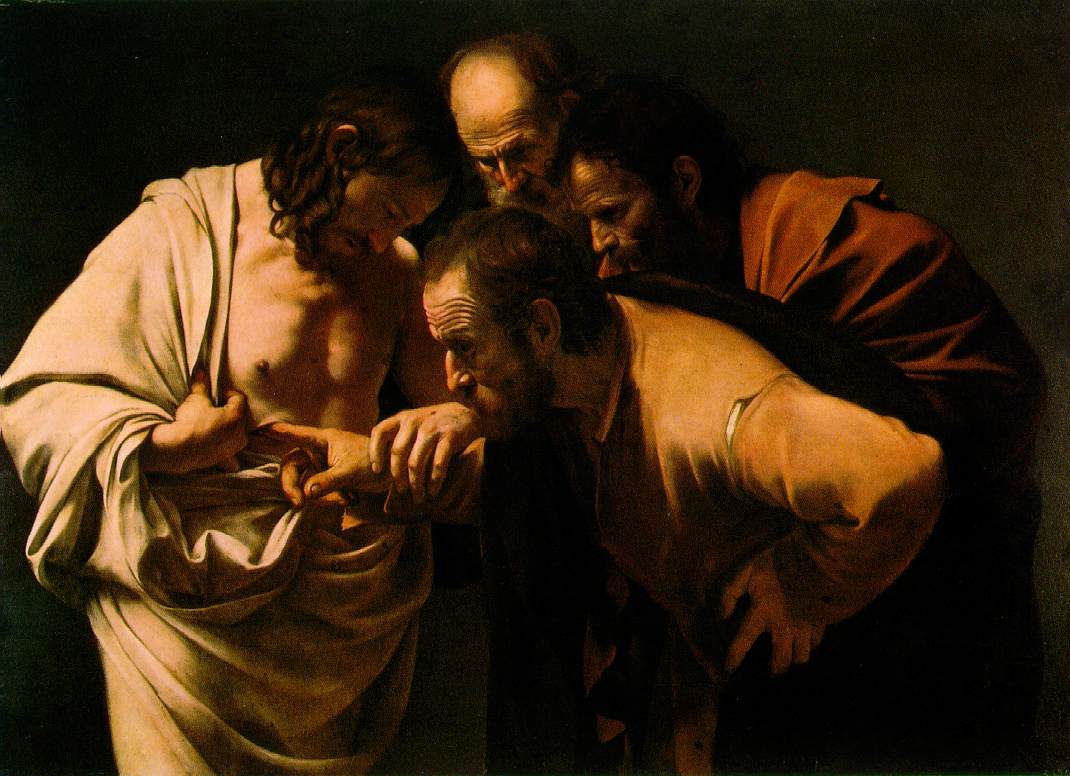
I'm currently reading Andrew Graham-Dixon's biography of Caravaggio, and am thoroughly enthused about it. It places the artist's life and work in a richly evocative social/historical context, an approach that works really well - partly because the historical learning is worn lightly, such that it never feels like an 'academic' treatment. The writing is fluent, varied and unobtrusive.

The section I read today dealt with a visitation of the plague in Milan when Caravaggio was a child - two years of death, suffering and misery: all Caravaggio's male relatives died, and the city streets were full of corpses and carts carrying the dead. You can't help but see the twisted, pained bodies of some of Caravaggio's paintings in this light...especially the sickly, greenish hues of the dead bodies therein.

Amid the plague, the city's most powerful cleric organised a series of 'spectacles of penance', one aspect of which was to set up miniature shrines throughout the city. Graham-Dixon writes beautifully about how "On a multitude of outdoor altars 'there burned a great quantity of candles and much incense'. Flame and shadow: Milan had become a city of chiaroscuro."

Caravaggio chiaroscuro

Splendid book - I recommend it.


Wednesday, August 10, 2011

Resonance

Reading a book about German intellectual history this evening, and this passage (citing Herder) resonated with me given the current febrile social climate: "To fail to make use of man's divine and noble gifts, to allow these to rust and thus to give rise to bitterness and frustration, is not only an act of treason against humanity, but also the greatest harm which a state can inflict upon itself."

Tuesday, August 02, 2011

Quieting

I turned off my machine, which was playing my habitual choice of music.

I turned off my preferred radio station.

I turned off the car ignition, and the air blower stopped huffing.

The leaves of the trees whispering.

The birds in the hedge-shadows calling to each other.

The low rumble of a distant airliner.

A pigeon's rhythmic cooing, dreamy and drowsy in the dappled sunlight.

In the centre of it, me, listening to my mind.

Sent from my iPhone

Monday, May 30, 2011

Hell+Handcart, Part 47


I know that I am somewhat out of touch with the dominant norms in my country's popular consciousness, but when all of the UK's leading news organisations agree that the doings of FIFA are the lead news story...well, I am forced to resort to astonishment.

Monday, May 23, 2011

Resisting Anthropomorphism, Part 735


You walk across the field. The sheep and the lambs look up, startle, skitter away from the path. Then they pause in the golden evening sunlight, feet planted in the emerald-green-after-the-rain grass.

You look at them, and they look at you. You see the cheeky-looking ones, the lively ones, the nervous ones hiding behind their mothers, and the little pale one, shivering in the breeze and looking vulnerable.

You look into their eyes and you have to remind yourself that all of this meaning is mere projection.

Wednesday, May 11, 2011

To a Mountain in Tibet


I'm not usually one to go in for gushing reviews, but sometimes something comes along that is so good that I just can't help myself. One such artefact is Colin Thubron's To a Mountain in Tibet.

There are always good reasons to read Thubron's books: the beautifully balanced and poised prose, the colourful imagery, the historical and philosophical depth, and the insights into half-hidden cultures. As ever, this book is full of lovely writing - by turns vivid, fluent and spare, and, in this book at least, pretty austere (like much of the rocky scenery). But the spareness of the writing embodies the richest of philosophical/religious pictures, as befits a book about a journey to a mountain that is sacred to about a fifth of the planet's population, and the intricacies of Buddhist and Hindu belief unfold along the stony trackways and in the gloom of remote monasteries, where candles gutter and monks old and young struggle to find a shared language to make themselves understood amid the shadowed statues and prayer flags. 

If Thubron was a craftsman, he'd be creating Faberge eggs, or delicate friezes of wooden fretwork, or Grinling Gibbons-type carvings; but the style is never just for its own sake - it's there to act as the vehicle for the story/the journey.

As well as the usual fine writing, there's an emotional edge to this journey: the recent death of Thubron's mother and, it becomes apparent, the ghost of his long-dead sister. Their stories intertwine with the narrative of the journey through Nepal and Tibet and on the approach to the holy mountain. As the journey progresses, the spiritual allusions blend with the descriptions of the scenery, and to the dozens of deities and demons that haunt the landscape for believers. 

These different elements all intertwine, and you feel as if you are circling the beliefs just as the pilgrimage path circles Mount Kailas; the spiritual journey echoes the physical trek, sliding in and out of focus as you move closer towards some kind of truth. The  threads are all drawn together skilfully in the concluding pages, and the climax of the journey takes place on the high slopes of the mountain, above 18,000 feet, amid tired, happy pilgrims who have completed their circuit. If you read the final section of this book and remain unmoved, you should probably make an appointment with your cardiologist and get them to check whether your heart has been removed.

Highly recommended.

Thursday, November 04, 2010

Food and Dreams


Dreamed last night that I was riding around the village on my bike, and that I stopped at a house, went in, and sat on the floor (bare boards). I was watching the family pet - a beetle - move an inverted teacup around on the floor. The beetle then transformed itself into a piece of china, then a rodent, and then a cat.

The family took all this in their stride, accepting that this was normal. I advised them that the scientific community and the military would pay millions to get hold of this creature and sequence its DNA. They remained unconvinced.

I think this dream was seeded by the 'meal' we had at the services on the A14, travelling back from May's funeral on Wednesday. Desperate for something hot to eat, we decided on something from KFC, which I believe was called a 'Boneless Box' (not very promising, I should have realised). Let's just say that the wobbly, pallid, damp bits of 'meat' shivering inside their various fatty coatings bore more than a passing resemblance to the shape-shifting, amorphous blob of matter (of indeterminate genetic origin) that I found in my dream.

Tuesday, September 28, 2010

Sidetracked


True to my resolution to get out in the open air more, this morning I wheeled my mountain bike out of the newly cleaned garage and set off, heading for the Farndon Road. It was one of those ‘in-between’ autumn mornings: sun and some white cloud, with a surprisingly strong breeze that made me glad I had layered up under my fluorescent yellow waterproof jacket; remind me to apologise to the Met. Office – it is pretty cold.

Along the Farndon Road, and up the short, sharp climb to the top of Warden Hill, then freewheel down to the Welsh Road (an old sheep-droving route to London) and across the A361 to Aston-le-Walls; stopped at the crossroads and was startled by the loud surf-noise as cars barrelled down the long, straight slope. An accident blackspot, so I’m always cautious when crossing here.

Safely back on the B-roads, I did a circuit of Aston-le-Walls and picked up the single-track road that skirts the old RAF aerodrome at Chipping Warden: there are ruined brick walls in the undergrowth and the patchy little woods that line the road, and concrete tracks and dispersal pans through the field gates. I always start to feel alert and engaged at this point on this ride, as my long-ago monomaniacal obsession with Bomber Command imaginatively transforms each weed-obscured, rusted oil drum into an object imbued with the resonances of the past.

On that little track, west of Aston-le-Walls, my imagination bifurcates, pulling in firstly these imaginative historical associations, and then secondly recalling little incidents from my own life. The site of the old airfield is now home to a number of logistics and distribution firms (at one point, cars were stored on one of the old runways), with the big old hangars still in use as warehouses, and with modern offices, Portakabins, covered smoking areas and picnic tables for the workers dotting the surrounding areas. From this site, during the second world war, flew Wellington bombers, aircrew and groundcrew passing their lives in these same surroundings.

During my college years in the mid- to late 1990s I signed on with a local temp agency and got work on this site in the long holidays: summer and Christmas, essentially, packing things in boxes, printing labels, wrapping palleted stacks of boxes in shrink wrap on a big machine: Virgin, 3COM, Guinness, mobile phone distributors. £5 an hour or so, but conducive to improved fitness in the summer – the old hangars had no air conditioning, and the sun beating down on the metal roof would create a suffocating, sweat-inducing atmosphere in the afternoons. I would usually do the 2pm-10pm shift, and cycle to and from work. A few images stick in my memory: cycling home in the cooler darkness at the end of a shift, you’d feel a burst of heat as you passed the long brick wall as you came into Aston-le-Walls, the red bricks giving off the heat that they had absorbed during the day; fields lit by the full moon, seen from the top of Warden Hill; a rabbit bumping against my pedals as it ran across the road, passing between the bike’s wheels; and a bright meteorite fizzing across the sky on the dark, dark night when the batteries ran out on my front lamp.

The track around the perimeter takes you past the warehouses, the hangars, the car parks and the security gates, then past some grazing land and allotments and into Chipping Warden village, from where you pick up the Culworth Road, which leads back to the Welsh Road. Riding along the Culworth Road, with greyer clouds blowing in overhead, I passed a little concrete track on the left that runs between two big fields. I’ve seen this track dozens of times, but never followed it before – I’ve always thought that it just ran up to some farm buildings. I did a wobbly 180 degree turn on the narrow road and went back.

The start of the track is rubbly and broken up, but further along the concrete is smoother, and patched with darker repair material. Encouragingly, there’s a ‘public footpath’ sign pointing along the track. You pass some pre-fabricated buildings that are half-hidden in the trees, and get a sense of a hand-built home, a mix of wood and brick, vegetable gardens and old machines rusting in the long grass, and then, after dismounting and lifting the bike over a stile, you come to a three-way junction: tracks to left and right, and one straight ahead. They’re all concrete still, remnants of the airfield’s remoter outposts, and there are trees growing much more thickly here, and it’s quite gloomy now under the twin canopies of cloud and leaves.

I explore the tracks in turn, on foot, and immediately start to see old brick buildings among the trees: many of the structures were built half-submerged in the earth, and have narrow, brick-lined entrance passages – probably shelters, bomb dumps and the like. Seventy years on, they have trees growing out of the thick earth and moss that has collected on their hump-like roofs. There are tall weeds everywhere, and fragments of fallen brick walls amongst the foliage. In the dim light, it’s like history fading back into the earth.

There’s a feeling of melancholy and decay in the air, and I have a sense of all the forgotten sites that there must be like this all over the country, off back roads, hidden by trees and weeds at the end of little-used tracks: places that were once vibrant with activity, with men and women doing their duty, living out life and death in wartime, a little self-contained town plonked down in the space between a couple of small villages, with outbuildings and concrete hardstanding dispersed across the countryside. And now it’s all crumbling away: the rendering on many of the bigger buildings is dropping off, revealing patches of brickwork underneath. In the interior of one block I can see building materials stored in the damp gloom (there’s a padlocked bit of chain link fencing across the entrance), and there are skips full of rubble and old metal in the woods.

One of the roofless bigger buildings has trees growing inside it, and a still-roofed part with a thirty-foot high ceiling and runners for big sliding doors; I imagine cranes and little tractors for loading bombs/towing the bomb trollies, but now there’s just a bare concrete floor, a wheelbarrow, and a bright cast of light from the sun-side window.

Further west along the track, the buildings are more decayed, more actively destroyed, and, in some cases, burned out (piles of twisted corrugated metal roofing, collapsed joist constructions, a chimney stack on its side). I realize why all of this is so familiar: from far back in my brain, memories of darkened brick buildings and pill boxes creep forward – the childhood haunts of a second world war-obsessed kid and his best mate.

Freddie and I used to play ‘war’ a lot, and we fancied ourselves as putative commandos. A few hundred yards from the end of our street, and just past the junior school that we both attended, was an area that we called ‘The Barracks’. It started just beyond the housing estate and its supporting facilities (school, a couple of shops), where the pavement stopped and gave way to rough grass, concrete tracks, low shrubs and, further in, broad concrete pans and high mounds of grass and earth, secured in brick-walled bases. This was a dream playground for us, full of broken glass, the odd rusting car, metal hatchways that opened onto drains and who-knows-what, shells of buildings, pill boxes, and the high mounds, down which we would careen on our little bikes. Many of the ruined buildings showed crude signs of recent habitation: empty bottles and cans, ashes from fires, the ever-present smell of urine and faeces, and, in one case, a perfectly deposited coil of poop that mimicked the towering structure of the Walnut Whips that we would take with us on our missions as ‘rations’. There are darker memories, too: of the time that we got into a big hut that was clearly being used by some people/organisation (there was a padlock on the door and made-up camp beds inside) and panicked when we heard voices approaching outside; of being bullied/robbed by bigger boys (which sullied and contaminated what we thought of as ‘our’ playground); and flying over the handlebars of my bike when the chain seized, and landing on my forehead, hard…I remember getting home, feeling dazed and ill, but I never told anyone what had happened. (This could explain a lot about my cognitve abilities/emotional retardation.)

This is all echoing in my mind, all afresh, as I follow the last bit of path through the woods, and on to the stile that lets out onto the pastureland. After hefting the bike over the high, rickety wood-and-wire fence, I pause for a minute to get my breath back. The pasture drops away, all rich green grass still, to the Welsh Road, on the other side of which rises Job’s Hill. I suddenly notice a couple of birds whizz by, and as I look down I see that there are swallows skimming past just above the top of the grass, a couple of dozen of them doing circuits, passing just a few feet from me. I watch them for a while, wondering what they make of the sudden fall in temperatures, and trying to picture them making the flight to their winter grounds in Africa.

The wheels of my bike leave a trail through the ankle-high grass as I push it along the footpath and down to the field gate. After crossing the road,  I make the steepish climb up the western edge of Job’s Hill, staying close to the fence and dipping in and out of the sheep tracks. As I go higher, I start to feel the force of the cold wind.

At the top, I pause and look back, down past the scooped-out side of the hill, to the woods that I’ve just been walking in: they look sealed and uniform from here, the autumn foliage (just starting to yellow in places) concealing all of the buildings and the decay. Further off, I can see the hangars and ancillary buildings of the logistics centre, as well as the line of poplar trees that were planted along the axis of one of the old runways.


Walking to join the bridleway that skirts the edge of the next field, I look at a tree in the hedge: a bit of blue nylon rope has been tied around it at some stage, and the tree has expanded to fill the rope loop to bursting – the bark is starting to bulge out beyond the nylon.

Rain is starting to fall as I ride along the tarmac track that leads past a couple of cottages to the Farndon Road, but I stop to take some pictures of a big bird that’s hovering above the roadside verge. At first, the bird puzzles me: it’s hovering like a kestrel, but it’s too big to be that, and its wingbeats have the wrong rhythm. It moves closer to me, and eventually I realize that it’s a buzzard. (I’ve never seen one hover like this.)


The rain is falling more steadily as I reach the last mile of my ride. The drops are sharp and cold on my face, and the rainfall is making a silvery curtain that mists the trees at the top of Eydon Hill. Suddenly cold, I find myself thinking about how nice it would be to have a cup of chocolate and some buttered toast when I get home. And then my mind wanders on to memories of rain-greyed Sunday afternoons in childhood, fading into dark nights full of dread of the inevitability of school on Monday morning.

It’s good to take a neglected path and find new things (as well as reminding yourself about things that you’d forgotten). I might try and get sidetracked again soon.

Monday, July 26, 2010

Eulogy for my stepdad


(from his funeral last week)

I consider myself very lucky to have known Glyn, and privileged to have such a kind man as a step-father.

I don’t think that Glyn would have thought of himself as an heroic man, but he did something pretty brave in his mid-50s – he married my mum. Not that that was brave in itself (she’s lovely, of course), but she came attached to three sons and a very boisterous dog.

It can’t have been easy to adopt a pre-packaged family unit after decades of bachelordom, but he did it with aplomb.

I remember when mum first said that she was going out for the evening with ‘a man called Glyn’. I pictured a big, burly prop-forward kind of fella, with cauliflower ears and a low IQ. Instead, I met a polite, gentle man who liked classical music (especially light opera and Beethoven), and whom I instantly wanted to impress (no teenaged rebel, me…).

Of course, Glyn’s quiet façade soon began to slip, and his true nature showed through, in the form of a river of talk, endless stories and a great big laugh – like a Welsh Syd James on steroids – He yah yah yaaah!

He also revealed his loving and protective nature, looking out for mum amid teenaged tantrums and selfishness, rarely raising his voice or losing his temper (despite heavy provocation from the younger generation…).

For us boys, and for mum, he provided great solidity, security, warmth and comfort: priceless for our family after a period of upset and instability.

In later years, after his retirement, I got to know Glyn better, especially when I was at colleges and had long vacations. We went for lots of walks together, often involving canal tow paths and invariably ending up at a pub, and we would enjoy the countryside and the wildlife together, and get mellow over a pint.

The things that I’ll remember most about Glyn are his kindness, friendliness and generosity, which he showed to everyone he dealt with, every day, every time. I think this capacity for kindness and goodness characterise his essential nature.

He showed me that the value of a life can be measured in the small things that you do every day: in the way that you treat people, in the mark that you make on others, in the security and peace and atmosphere of warmth that you create for them.

If I can live a life as kind and as affection-evoking as Glyn’s, I will be happy. He was a fine role model.

Safe journey, old boy!

Tuesday, April 27, 2010

A 361, Early Morning


Above the hedge, where the road bends ahead, I can see a little bit of steam catching the light from the just-risen sun. When I get there, there are some cows browsing the grass and hedge, brown and white shoulders and heads all lit up in the bright light. As I pass, I can see the sunlight glinting in the big, glossy eye of the nearest cow, which is lifting its nose up. That eye must be taking in my speeding car, the hedge opposite, the weird ribbons of mist above the line of the stream through the meadows, and the slight rise in the land; and, above that, the crystal light of the low sun. That animal is staring at all of life, and its own clear, imminent death in the service of human needs. (Like all of us...)